
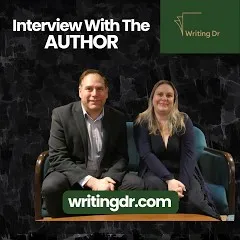
Robin Waite reveals how a single podcast appearance, backed by his book, generated 3,000 leads and £250k in new business, without social media overwhelm.
Your book is not the end product - it is the marketing engine that generates leads, opens doors, and builds a business long after launch day.
In this episode of Interview with the Author, host Peter Russell from Writing Doctor sits down with business coach Robin Waite to explore how business owners can use a book as a high-leverage marketing asset. Robin draws on 22 years of business experience and six published books to reveal the strategies behind generating thousands of leads from a single podcast appearance, without relying on social media.
Robin shares the data, frameworks, and practical steps that took his humble coaching practice from 30-plus hours a week of content marketing to a partnership-led model that delivers ten times the results in a fraction of the time. He also covers the most common mistakes first-time authors make, and why the process only truly begins once the book is live.
This article breaks down their conversation into practical steps for coaches, consultants, and freelancers who want to turn a published book into their most powerful business development tool.
Robin spent years following conventional content marketing wisdom, short and long-form video, daily social posts, blogging, podcasting, email marketing. The result was burnout, not clients. When he audited his leads, almost none could be traced back to that activity.The shift came in 2023 when Robin doubled down on partnerships. Rather than building his own audience from scratch, he focused on finding people who had already built audiences he could speak to. The book became his entry point.When Robin appeared on Ali Abdal's podcast, he planned to give away 15 signed copies. Within five minutes of the episode going live, all 15 were claimed. He kept sending copies in response to demand, shipping 1,500 in the first 90 days and generating 3,000 leads over the following 12 months. From those leads came approximately 45 clients and around £250,000 in new business.The numbers tell the story clearly. Social media demanded 30-plus hours a week for lottery-ticket results. Partnership activity takes two to three hours a week and delivers a return ten times greater. But, and Robin is emphatic on this, it only works because the book exists.
Robin's lead generation mechanic is deceptively simple. He built a data capture form; name, email, phone number, address, and an optional country field, and gave people the chance to request a signed copy of Take Your Shot. The form also invites a voluntary donation toward postage.The economics work in his favour. Royalties from the book's normal sales channels, combined with the donations from generous readers, mean that the giveaway programme runs at roughly cost-neutral. Robin is effectively generating up to 5,000 leads a year for almost no marketing spend.He uses Kit (formerly ConvertKit) to manage incoming leads. When a request comes in, he prints a label, signs the book, and takes it to the post office himself, a deliberate choice. In a digital world, Robin argues that the physical gesture of a hand-signed book carries a weight that a PDF download or a website visit cannot replicate.
To find homes for the remainder of the 5,000 annual target, Robin sponsors events. Rather than standing at an exhibition booth, he simply asks whether the event is doing goodie bags and offers to supply books. At Atomicon - a sales and marketing conference in Newcastle, he sponsored the goodie bags for £1,500 and put 500 copies of his book directly into attendees' hands.Over three years, that initial sponsorship evolved into a speaking slot and an associate coaching role in Andrew and Pete's Maverick's programme. The book created the relationship; the relationship created the opportunity.
One of the most overlooked realities of book marketing is the lag effect. Robin is clear: after a launch, crickets. Every single one of his books has produced the same anti-climax. The initial fanfare fades and nothing seems to happen.The reason is straightforward. Not everyone will sit down and read a business book the weekend they receive it. Not everyone will face the problem the book addresses at the moment it lands in their hands. Not everyone will have the budget to engage with a coach right away.But books wait. They sit on shelves. They get picked up six months later on a Sunday morning. Robin still receives messages from people who were given Take Your Shot three, four, or five years ago and have finally read it. Those messages open conversations that become clients.The implication for authors is to resist measuring success by the week of launch. The goal is to get as many books into as many hands as possible and trust that the returns will follow.
Robin references Daniel Priestley's 7-11-4 model to explain why the book is such a powerful asset. The framework holds that a buyer needs approximately seven hours of engagement with a brand before making a purchasing decision, across eleven touch points and four different locations or contexts.A business book of 40,000 words takes the average reader around five and a half hours to complete. That single touch point accounts for most of the seven hours. Combine the book with a two-and-a-half-hour long-form podcast interview, as happened with Ali Abdal, and you have essentially closed the trust gap in two interactions.This is why Robin's clients consistently tell him they read Take Your Shot before joining his business coaching programme. The book may not be the single deciding factor, but it has done the heavy lifting of building familiarity, demonstrating expertise, and establishing credibility long before any sales call takes place.
The most damaging mistake is treating the first book as a DIY project. Cover design, typesetting, and proofreading all signal quality before a reader has absorbed a single word. Poorly spaced fonts, inconsistent formatting, or a cover that looks home-made, even if only noticed subconsciously, will undermine the credibility the book is supposed to build.Robin learned this firsthand. An early version of Take Your Shot contained numerous typos until a reader pointed it out directly. He hired a proofreader, updated the cover to align with his brand colours, and saw engagement improve. For a first book, he recommends working with a hybrid publisher rather than attempting full self-publication.
Writing and publishing the book is roughly 10% of the work. The real effort begins on launch day. Authors who expect a new release to generate organic sales without active marketing will be disappointed. A book needs a review campaign, consistent promotion, and a deliberate strategy for getting into people's hands.
Robin is candid: most business authors need to write several books before one gains traction. A single title is a lottery ticket. Multiple books signal expertise, build a coherent body of work, and raise the author's standing in their field. Robin's credibility is not built on Take Your Shot alone; it is built on six books and counting.
Business books built around specific tools, apps, or platforms date quickly. Robin notes that an earlier book he published now reads as outdated because it referenced SaaS tools that are no longer relevant. The books that endure are built around frameworks, proprietary thinking, methodologies, and principles that belong to the author and will outlive any particular piece of technology.
Days 1 to 30:Get the asset right: If the book is not yet published, prioritise professional cover design and a thorough proofread. Set up a simple data capture form to receive signed copy requests, with an optional voluntary donation field. Order stock and arrange a reliable fulfilment process.
Days 31 to 60: Activate partnerships: Identify five to ten people in your industry who have already built the audience you want to reach. Podcast hosts, event organisers, community leaders, and educators are all viable targets. Approach them with a clear offer; a free book for their audience, a guest appearance, or event sponsorship. Prioritise quality over quantity.
Days 61 to 90: Sponsor and speak: Research upcoming events attended by your ideal clients and offer to sponsor goodie bags with your book. Attend events where you are known and let the book introduce you. Begin collecting testimonials and social proof from readers, then use these to pitch speaking engagements.
"I haven't got a big enough audience to make the book worthwhile." Robin's point is the opposite; the book creates the audience. You do not need 100,000 subscribers to get value from a published book. You need good content and a strategy for putting it into the hands of the right people via partnerships.
"Giving books away for free will eat into my profit." Robin's giveaway model runs at roughly cost-neutral when voluntary donations and standard royalties are factored in. Even if it cost a little more, the return on a single client conversion dwarfs the cost of a few hundred books. Treat it as a marketing budget line, not a cost of goods.
"I'm not a writer." Robin points to dictation tools and AI transcription, including Ali Abdal's Voice Pal app, as ways to produce a first draft without sitting in front of a blank page. Narrate your thinking, hand it to a professional to structure and refine, and the book will find its form.
"My book didn't take off after launch." The lag effect is real and universal. Robin has experienced the same anti-climax with every single one of his books. Sustained marketing,reviews, giveaways, events, partnerships - is what drives long-term results. The launch is the starting gun, not the finish line.
A business book is one of the most powerful lead generation tools available to coaches, consultants, and freelancers, but only if it is built, published, and marketed with intent. Robin Waite's journey from 30-plus hours a week on social media to a partnership-led model generating £250,000 from a single podcast appearance is a clear demonstration of what a well-positioned book can achieve.The mechanics are straightforward: write the book, get the cover and editing right, build a simple giveaway system, and find the partners who can put it in front of the audiences you want to reach. The lag effect means results take time to materialise, but the leads that do arrive are warm, self-qualified, and already familiar with your thinking.If you have been sitting on the idea of writing a book, Peter Russell and the team at Writing Doctor work with business owners to bring that idea to life professionally. And if you are ready to work on the pricing strategy and business model that sits behind the book, Robin Waite's Fearless Business coaching programme gives coaches, consultants, and freelancers the frameworks to grow with confidence. Be fearless, take your shot, and get your book written.
Interview with the Author is hosted by Peter Russell, writing coach and publisher at Writing Doctor. The show features conversations with authors and business owners about the process, strategy, and impact of writing a book. You can follow Peter and the Writing Doctor community here:
Watch the full episode: Interview with the Author - Robin Waite on YouTube

Answer 40 questions and we’ll send you a personalised report with feedback tailored to your specific needs. It's quick and free and you get a FREE copy of Take Your Shot.
This Scorecard has been designed to show Coaches, Consultants and Freelancers their blind spots and provide instant, actionable steps on how to increase their prices.


