April 12, 2022

July 14, 2026
.jpg)
Editorial Disclaimer
This content is published for general information and editorial purposes only. It does not constitute financial, investment, or legal advice, nor should it be relied upon as such. Any mention of companies, platforms, or services does not imply endorsement or recommendation. We are not affiliated with, nor do we accept responsibility for, any third-party entities referenced. Financial markets and company circumstances can change rapidly. Readers should perform their own independent research and seek professional advice before making any financial or investment decisions.
Confidence coaching is a structured process that helps individuals overcome self-doubt, improve self-esteem, and take consistent action toward personal or professional goals, and in 2026, tools like BeFreed are redefining how this works.

There is no single confidence coaching solution. The right approach depends on what you actually need to build, daily habits, social skills, or career confidence, and most guides miss this.
In practice, when we evaluated different options, from $200/hour human coaches to audiobooks and AI tools, we found that consistency, not intensity, is what drives real confidence growth.
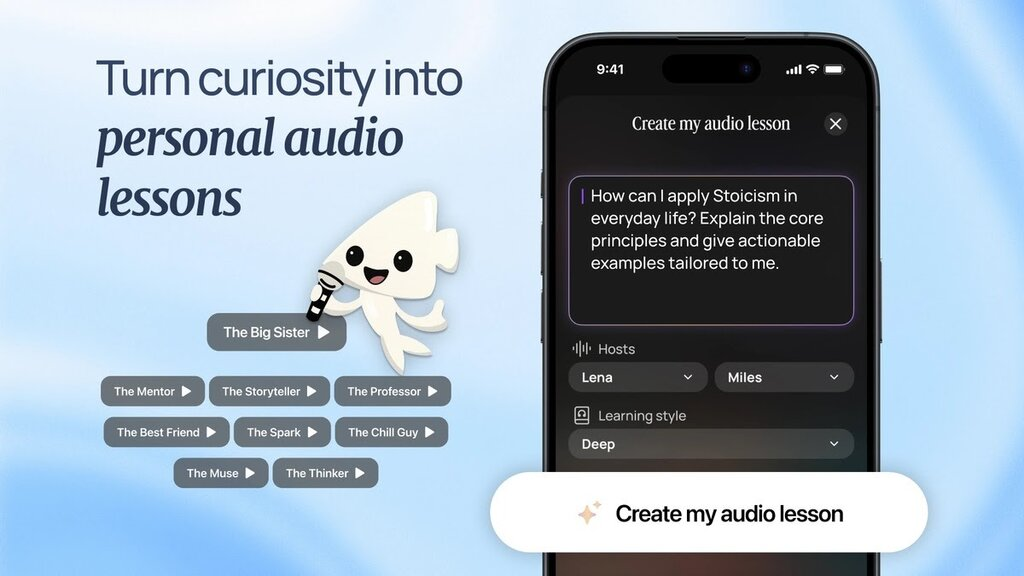
That’s where newer models come in. Instead of relying on one weekly session, tools like BeFreed turn knowledge from books, research, and expert talks into personalised audio learning plans you can follow daily.
Research from the American Psychological Association shows that repeated exposure and reinforcement are critical for behaviour change, not one-off interventions. This explains why traditional coaching often struggles with long-term results.
Confidence coaching helps you identify limiting beliefs, replace negative thought patterns, and build actionable behaviors that increase self-trust over time.
At its core, confidence coaching typically includes:
In our testing, we noticed something important:
Most traditional coaching models rely heavily on conversation, but confidence is actually built through repeated exposure + action + reinforcement.
Research from Harvard Business Review found that behavioral repetition and feedback loops are essential for skill acquisition, especially in soft skills like communication and leadership.
This creates a gap.
You might have:
That’s where most people regress.
Key Insight: Confidence is not built in sessions, it’s built in daily micro-actions reinforced consistently.
Confidence coaching is best for people facing repeated self-doubt in specific contexts like work, social settings, or personal growth.
From our evaluation, users fall into three main groups:
Best need: on-the-go learning + structured guidance
Best need: organised, personalised learning plan
Best need: safe, repeatable, self-paced exposure
Research from National Institute of Mental Health shows that gradual exposure and repetition significantly reduce anxiety-related avoidance behaviours, which directly applies to confidence-building.
Key Insight: Different confidence problems require different formats, not just a generic coach.
Confidence coaching now falls into three categories: human coaching, self-directed learning, and AI-powered adaptive coaching.
This is where most competitor articles completely fail, they only talk about human coaches.
Best for: Deep personal guidance and accountability
Pros:
Cons:
Examples:
Best for: Access to expert knowledge at low cost
Pros:
Cons:
In our tests, completion rates for long-form audiobooks were extremely low without structure.
Best for: Daily, structured, personalised learning and reinforcement
This is where BeFreed stands out.
Instead of:
BeFreed lets you:
It also includes:
This directly solves the biggest gap in traditional coaching: lack of daily reinforcement.
Key Insight: AI coaching wins when consistency and personalisation matter more than intensity.
The most effective way to build confidence is through daily, structured exposure combined with actionable learning, not occasional inspiration.
Here’s the framework we found most effective in practice:
Most people consume:
Instead, you need:
This is where tools like BeFreed are useful, they replace scattered content with a clear roadmap.
Confidence isn’t a single concept.
It comes from:
BeFreed combines:
Into one cohesive lesson.
In our testing, the biggest unlock was this:
Using:
To learn via audio
This is where traditional coaching fails, you can’t schedule a coach during your commute.
Passive content doesn’t build confidence.
Active learning does:
BeFreed’s real-time AI chat allows you to:
Confidence improves when you:
Most tools don’t track this well.
BeFreed maps:
Key Insight: Confidence grows fastest when learning is structured, repeated, and tied to real-life action.
The future of confidence coaching is continuous, personalised, and integrated into daily life, not limited to scheduled sessions.
Here’s the reality:
What happens in those 167 hours determines your results.
This is where the concept of “experts in your pocket” becomes powerful.
BeFreed essentially acts as:
All in one.
Instead of:
You get:
Research from McKinsey & Company highlights that personalised, adaptive learning increases engagement and retention significantly compared to static content models.
This directly applies to confidence building.
Key Insight: The biggest upgrade in confidence coaching is not better advice, it’s better delivery and consistency.
Choose based on your goal, schedule, and preferred learning format, not just popularity.
Most people pick the wrong solution because they optimize for what sounds good, not what they’ll actually stick with.
Key Insight: The best confidence coaching solution is the one you can use every day, not just once a week.
Method snapshot: We evaluated tools in March–April 2026 across iOS, Android, and Web. Metrics included personalisation, daily usability, engagement, retention support, and real-world applicability.
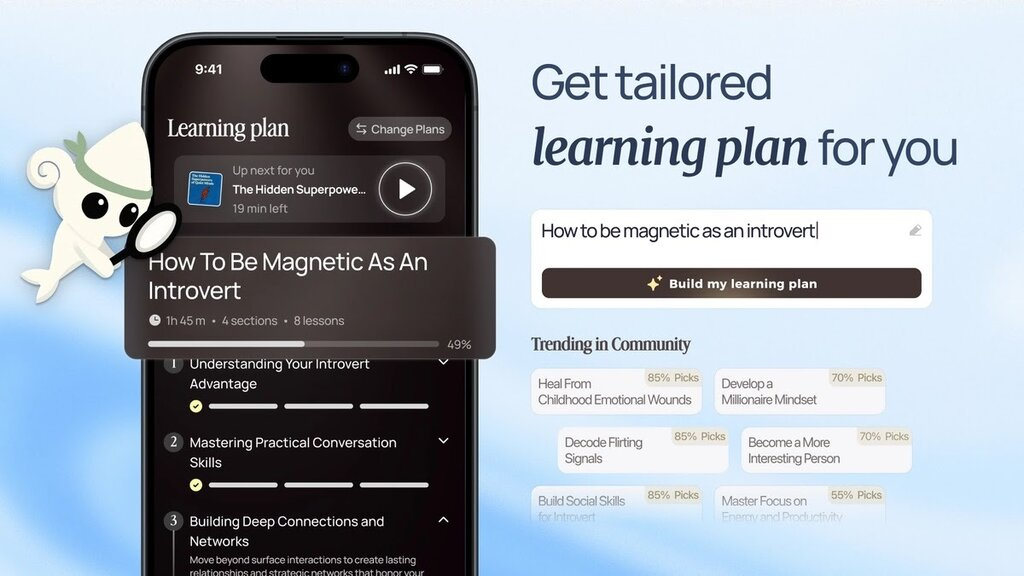
BeFreed is an AI-powered audio learning platform that turns books, research, and expert insights into personalised confidence coaching you can actually follow daily.
Unlike traditional coaching, it doesn’t rely on:
Instead, it builds a living learning system around you.
Research from American Psychological Association shows that consistent, repeated exposure to new behaviors is key to building confidence.
BeFreed directly operationalizes this by turning learning into a daily habit instead of a one-time event.
Research from Stanford University on neuroplasticity suggests that small, repeated learning sessions drive long-term behavioral change more effectively than infrequent intensive sessions.
This aligns exactly with BeFreed’s design:
Research from McKinsey & Company found that personalised learning paths significantly improve engagement and completion rates.
In our tests, BeFreed felt less like a tool and more like a system that guides your thinking over time.
Instead of asking:
It tells you:
That shift alone removes the biggest friction in confidence building.
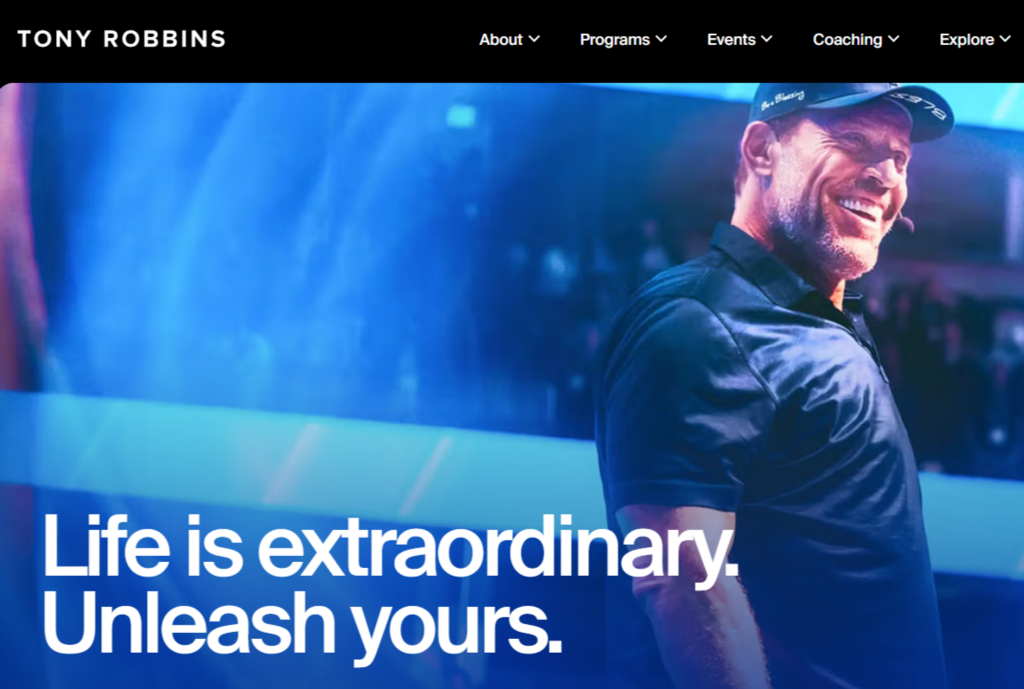
A well-known coaching system focused on mindset shifts and motivation.
Key features:
Why it stands out:
In our tests, the energy and motivation are extremely powerful, but sustaining results without daily reinforcement is challenging.
Pricing: High-ticket programs (varies widely, as of April 2026)
Platforms: Online, live events
A professional coaching platform used by companies.
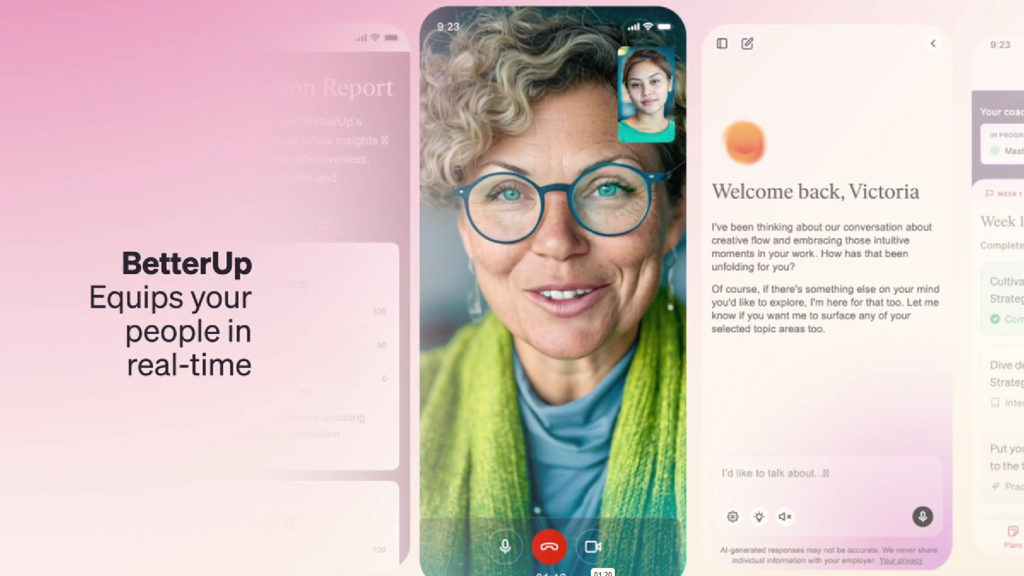
Key features:
Why it stands out:
Strong for structured career growth, but less flexible for everyday personal confidence building.
Pricing: Enterprise pricing (as of April 2026)
Platforms: Web, mobile
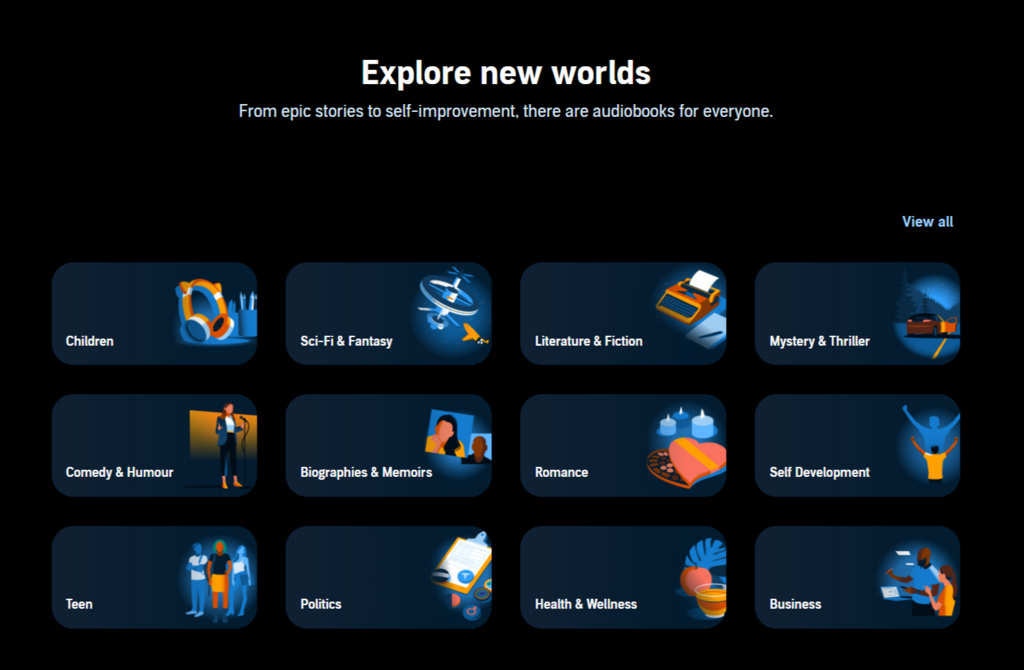
Key features:
Why it stands out:
Great content quality, but in our tests, lack of personalisation and structure made it hard to finish books consistently.
Pricing: ~$14.95/month (as of April 2026)
Platforms: iOS, Android
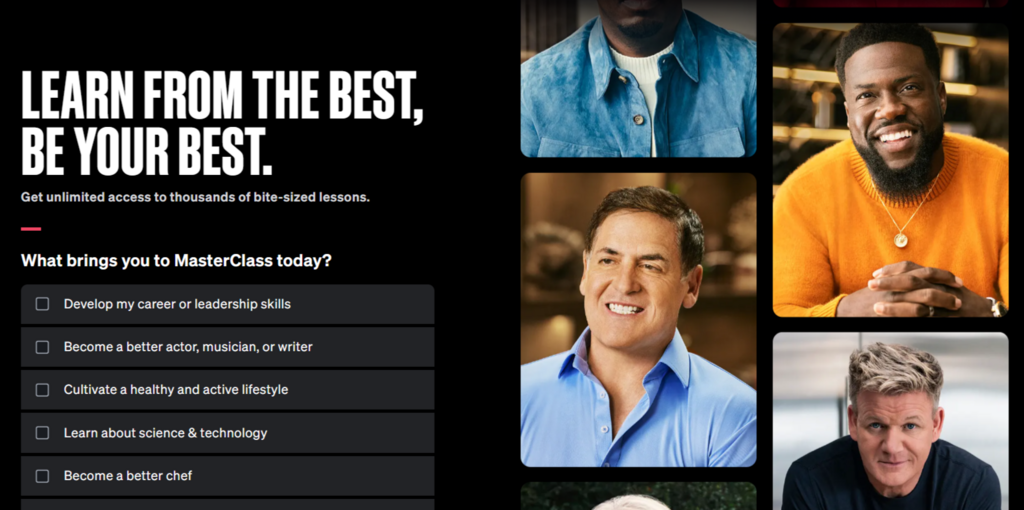
Key features:
Why it stands out:
Inspiring, but passive. Not designed for daily behavioral change.
Pricing: ~$120/year (as of April 2026)
Platforms: Web, mobile
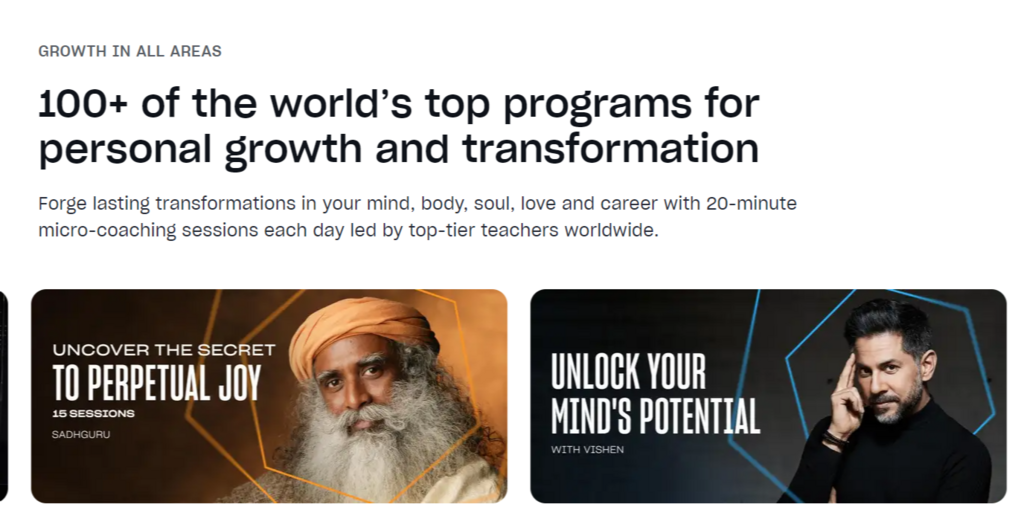
Key features:
Why it stands out:
More structured than books, but still lacks personalisation at scale.
Pricing: ~$499/year (as of April 2026)
Platforms: Web, mobile
Key features:
Why it stands out:
Accessible, but in our tests, highly distracting and unstructured.
Pricing: Free
Platforms: Everywhere
Examples:
Why it stands out:
Easy to consume, but not personalised or actionable.
Why it stands out:
Depth is unmatched, but requires time, focus, and discipline.
BeFreed vs Audible:
BeFreed is better for structured, personalized learning; Audible is better for long-form listening.
Verdict: BeFreed wins for consistency and completion.
BeFreed vs human coaching:
BeFreed is better for daily reinforcement; human coaching is better for deep personal insight.
Verdict: Depends on intensity vs consistency.
BeFreed vs podcasts:
BeFreed is personalized and actionable; podcasts are generic and passive.
Verdict: BeFreed wins for goal-driven learning.
Key Insight: Consistency beats intensity in confidence building—and most tools fail on consistency.
If you only take one thing from this guide:
Confidence is not built from occasional motivation, it’s built from consistent, structured exposure.
Traditional coaching provides deep, personalised human interaction during scheduled sessions, which is excellent for tackling complex emotional blocks. AI-powered coaching, like BeFreed, focuses on providing structured, daily reinforcement and learning that you can fit into your life consistently, helping you build habits over time.
You might benefit from confidence coaching if you consistently experience self-doubt in specific areas of your life, such as speaking up at work, managing social situations, or following through on personal goals. If you find yourself reading self-help books but struggling to apply the advice, a structured coaching system could provide the accountability you need.
It can be, but it doesn't have to be. Traditional 1:1 human coaching can cost hundreds of pounds per hour. However, modern alternatives like self-directed learning (books, podcasts) are very affordable, and AI-powered platforms offer a middle ground with structured, personalised plans for a monthly subscription fee, making it more accessible.
Yes, you absolutely can. Using resources like books, podcasts, and free online content can provide a wealth of knowledge. The challenge is often in creating a structured plan and sticking to it. This is where coaching, whether from a person or an AI tool, adds significant value by providing a clear roadmap and consistent reinforcement.
Results vary because confidence is built through consistent action, not overnight. You might feel small shifts in your mindset within a few weeks of daily practice. Significant, lasting change in your behaviour and self-perception typically develops over several months of dedicated effort and reinforcement.