November 16, 2026

Editorial Disclaimer
This content is published for general information and editorial purposes only. It does not constitute financial, investment, or legal advice, nor should it be relied upon as such. Any mention of companies, platforms, or services does not imply endorsement or recommendation. We are not affiliated with, nor do we accept responsibility for, any third-party entities referenced. Financial markets and company circumstances can change rapidly. Readers should perform their own independent research and seek professional advice before making any financial or investment decisions.
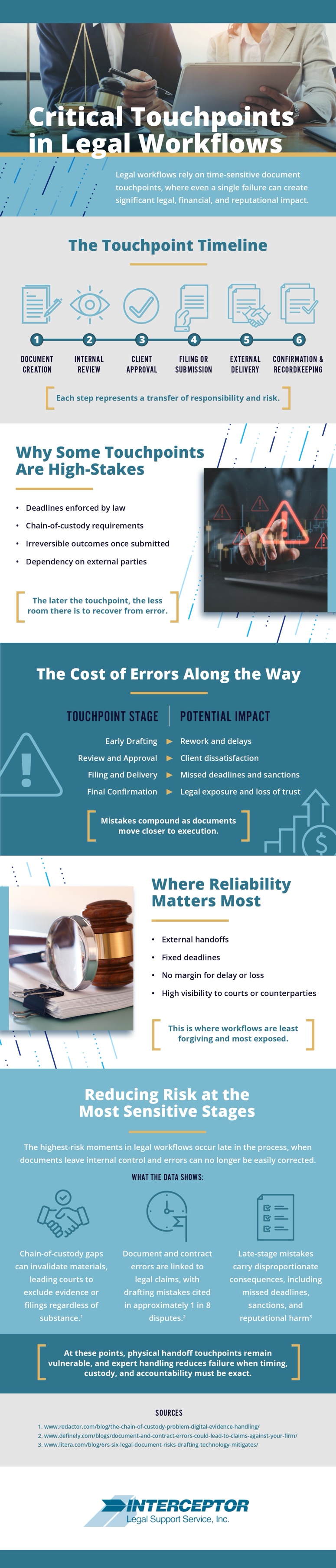
Legal work involves multiple stages where small administrative mistakes can create significant consequences. From client intake to document filing and case closure, each step depends on accurate information, clear communication, and timely action. Missed deadlines, incomplete records, and poorly coordinated responsibilities can delay proceedings and increase costs. For law firms and corporate legal departments, identifying critical workflow touchpoints helps reduce operational risks while improving efficiency and client service.

The first interaction with a client establishes the foundation for future legal work. Intake teams must collect accurate contact information, identify relevant parties, and document the nature of the legal matter.
Conflict-of-interest checks are particularly important before accepting representation. Missing a connection between parties could create ethical problems or require the firm to decline a case. Standardized intake forms help employees gather consistent information. However, attorneys should review submissions for missing details before proceeding.
Legal matters often involve contracts, correspondence, financial records, and evidence collected from multiple sources. Poor document organization can make important information difficult to locate. Centralized document management systems help teams maintain consistent file structures and control access to sensitive materials.
Version control also deserves attention. Attorneys working from outdated drafts may overlook recent revisions or submit incorrect information. Establishing naming conventions and document review procedures can reduce confusion, particularly when several employees contribute to the same matter.
Filing deadlines represent one of the most sensitive stages in legal operations. Late submissions or incorrectly formatted documents can lead to rejected filings and procedural complications. Legal teams should maintain centralized calendars that track court dates, response deadlines, and internal review milestones.
Some firms use court e-filing services to submit documents electronically and manage filing confirmations across different jurisdictions. However, electronic submission does not eliminate the need for verification. Staff should confirm that documents were accepted, review filing receipts, and address rejection notices promptly.
Poor communication can create unnecessary delays even when legal work is progressing correctly. Clients may miss document requests, misunderstand deadlines, or remain unaware of important developments. Establish clear expectations regarding communication frequency and preferred contact methods.
Internal coordination matters just as much. Attorneys, paralegals, and administrative employees should know who is responsible for gathering documents, preparing filings, and updating clients. Case management software can help track assignments and reduce duplicated work.
Accurate timekeeping and expense records support transparent billing and financial oversight. Delayed entries can result in missing billable hours or disputes over charges.
Legal departments should periodically review billing records, client trust account procedures, and applicable recordkeeping requirements. Case closure also requires attention. Final documents must be delivered, outstanding balances addressed, and records retained according to relevant obligations.
A reliable legal workflow depends on consistent execution across every stage of a matter. Accurate intake, organized documents, dependable filing procedures, and clear communication help prevent avoidable disruptions. Regularly reviewing these touchpoints allows legal teams to maintain professional standards. Check out the infographic below for more information.