November 16, 2026

Editorial Disclaimer
This content is published for general information and editorial purposes only. It does not constitute financial, investment, or legal advice, nor should it be relied upon as such. Any mention of companies, platforms, or services does not imply endorsement or recommendation. We are not affiliated with, nor do we accept responsibility for, any third-party entities referenced. Financial markets and company circumstances can change rapidly. Readers should perform their own independent research and seek professional advice before making any financial or investment decisions.
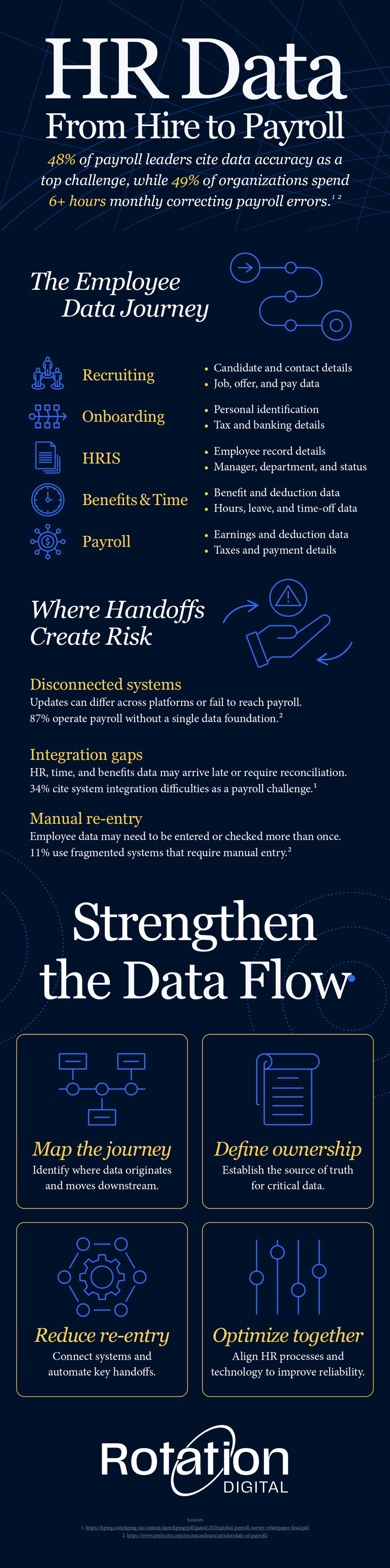
Employee information moves through several business systems before a new hire receives their first paycheck. Recruitment platforms collect applicant details, HR software stores employment records, and payroll systems calculate compensation and deductions. When these systems fail to communicate properly, small errors can create payment delays, compliance problems, and unnecessary administrative work. Businesses need consistent procedures for managing employee data throughout the hiring and payroll process.

The process begins when candidates submit applications through recruitment platforms. These systems may collect contact information, employment history, qualifications, and interview records.
Once a candidate accepts an offer, relevant information must transfer accurately into the company’s HR system. Manual data entry increases the likelihood of misspelled names, incorrect addresses, and duplicate records.
Businesses should establish clear rules for transferring information and identifying which system maintains the official employee record. Sensitive applicant information should remain accessible only to authorized personnel, with retention practices reflecting applicable legal requirements.
Onboarding introduces additional information, including tax forms, direct deposit details, employment classifications, and benefit elections. Errors during this stage can affect payroll calculations or delay an employee’s first payment. For example, an incorrect start date may cause problems with compensation, benefits eligibility, or paid leave accrual.
HR teams should verify required information before payroll deadlines rather than waiting until discrepancies appear. Automated integrations can reduce repetitive entry, but organizations still need procedures for reviewing incomplete or conflicting records.
Payroll accuracy depends on reliable information from HR, timekeeping, and benefits systems. Incorrect hours, outdated salary information, or missing deductions can create payment discrepancies.
Businesses should reconcile payroll reports before processing payments. Reviewing changes involving new hires, terminations, promotions, and overtime can help identify unusual transactions.
Access controls are equally important because payroll systems contain sensitive financial and personal information. Employees responsible for approving compensation changes should have clearly defined authorization levels.
Disconnected systems often force employees to enter identical information multiple times. This creates additional work and increases the risk of inconsistent records. A technology consulting firm may help businesses evaluate existing software, identify integration problems, and determine whether automated data transfers are appropriate.
However, successful integration requires more than connecting applications. Organizations must establish consistent data formats, clear ownership responsibilities, and procedures for correcting errors. Regular system audits can reveal duplicate records, failed transfers, and outdated employee information.
Employee records continue changing after onboarding. Promotions, address updates, benefit changes, and employment status adjustments must reach the appropriate systems.
Businesses should establish documented procedures for processing these updates and reviewing their accuracy. Periodic audits can also identify unnecessary access permissions and records that should be archived according to retention requirements.
Accurate HR data supports timely payroll, regulatory compliance, and reliable workforce reporting. Companies that standardize information transfers, verify critical records, and monitor system performance can reduce administrative errors. These practices also give business leaders more dependable information for staffing decisions, budgeting, and long-term workforce planning. Look over the infographic below for more information.