March 11, 2024

August 27, 2026
Editorial Disclaimer
This content is published for general information and editorial purposes only. It does not constitute financial, investment, or legal advice, nor should it be relied upon as such. Any mention of companies, platforms, or services does not imply endorsement or recommendation. We are not affiliated with, nor do we accept responsibility for, any third-party entities referenced. Financial markets and company circumstances can change rapidly. Readers should perform their own independent research and seek professional advice before making any financial or investment decisions.
Let me stop you right there. If you think starting a secure transport company means wearing a tailored suit and dodging armed robbers on the M1, find another industry.
The reality is far less glamorous. It usually involves:
I get clients asking me how to crack into this market all the time. They see the hourly rates we charge. Their eyes light up. What they fail to see is the massive overhead required just to turn the key in the ignition.
The last time I audited a logistics startup in this space, they burned through their initial capital in four miserable months. Why? They bought shiny vehicles outright instead of investing in impenetrable compliance systems.
You want to move high-value freight across Australia? You need absolute risk mitigation. The distances here are brutal. You aren't driving across a small European country. You are pushing assets across the Nullarbor. Mobile phone reception drops out for hours. Without satellite redundancy and a bulletproof operational plan, you are completely exposed.

Armoured vehicles are not cheap. You face a minimum of $250,000 for a decent retrofitted rigid truck. And that is just to meet basic Australian standards for ballistic protection. You can't just buy a used Hino, weld some steel plates to the internal doors, and call it secure. The tare weight alone will ruin your axles.
If you tie up all your liquid cash in buying these beasts outright, you will go bankrupt before you land your first corporate contract. You need serious working capital to float your daily operations. You have to pay for fuel. You have to cover wages.

This is exactly where smart truck financing saves your skin. Lock in a fixed rate for your heavy vehicles. Treat the monthly payment as a standard operational expense. Keeping your cash free is the absolute only way you survive the inevitable ninety-day payment terms your big corporate clients will throw at you.
Did you know the average commercial heavy vehicle loan rate in Australia currently hovers around seven to nine percent? You must factor that exact cost into your margin from day one. Make the maths work at those interest rates, or don't start the engine. Go run a standard courier van instead.
I see operators spend hundreds of thousands of dollars on GPS telematics, multiple cameras, and biometric vault locks. Then they hire a driver off Seek without digging into their personal history. It is utter madness.
Desperate people do desperate things. A standard police check is nowhere near enough in this game. You need comprehensive background screening.
You absolutely must know:
It sounds incredibly invasive because it absolutely is. Employee privacy takes a back seat to operational security when you haul multimillion-dollar assets.
Pay your staff well above the industry award rates. The Transport Workers Union sets the baseline minimums, but you need to pay a heavy premium for complete loyalty. I learned this the hard way years ago. We tried to save money on casual wages for a weekend run. A pallet of premium electronics mysteriously fell off the back of a truck in Western Sydney. The investigation cost us ten times what we saved on wages.
Cheap labour costs you everything in secure logistics.
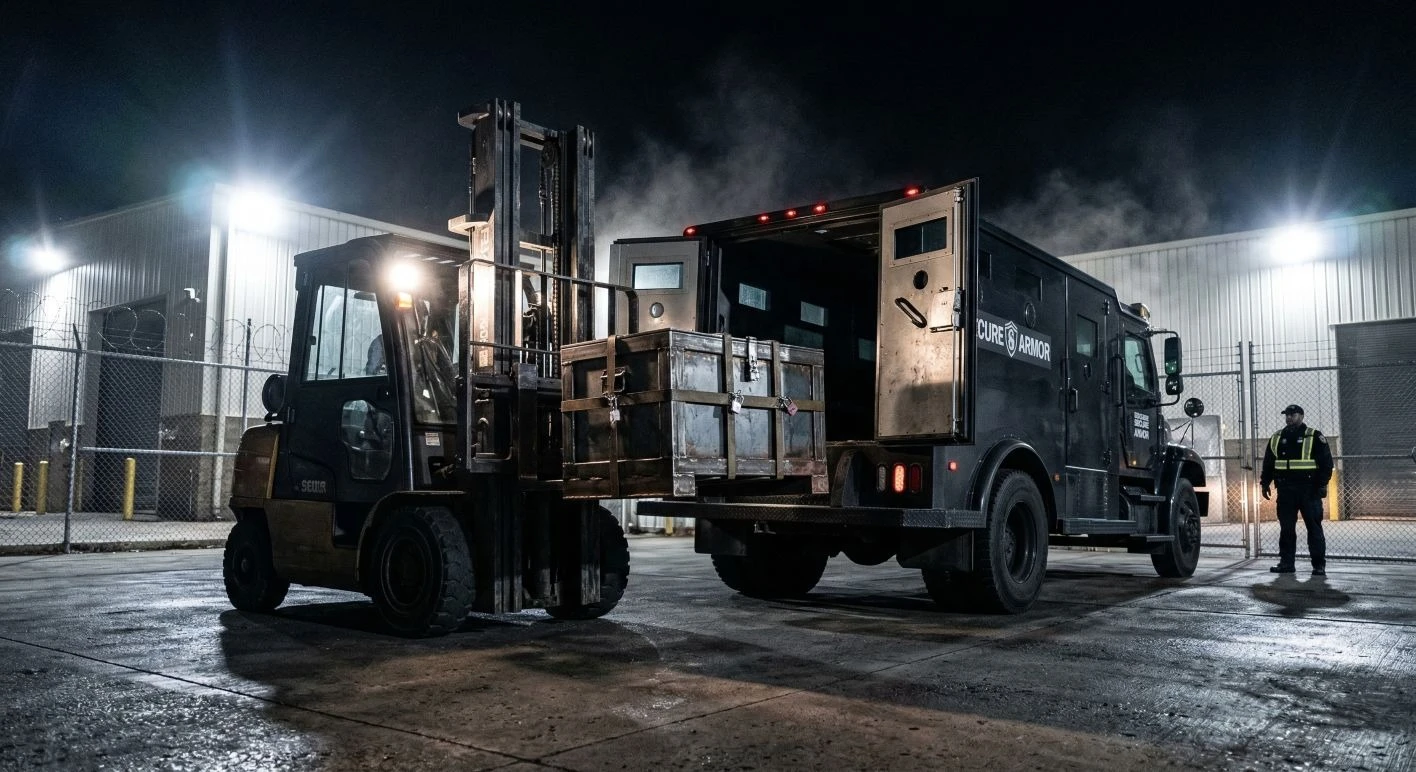
Don't try to be everything to everyone. The guys moving loose cash bags for local suburban ATMs play a completely different game from the operators moving bulk pharmaceuticals. Find your specific lane and dominate it.
One of the most lucrative areas right now involves the big end of town and physical assets. Think about the pure logistics of moving institutional gold reserves.
A private mint needs to transfer a massive load of physical bullion to a highly compliant precious metal storage facility. That is certainly not a job for a standard freight forwarder. The sheer density of the cargo requires specialised heavy vehicle suspension to handle the extreme weight in a very small physical footprint.
These jobs demand strict protocols:
The margins on these specialised secure runs are massive. You just have to build the flawless reputation required to actually win the tender. Keep your mouth shut and deliver the goods safely. Every single time.
You can't operate a single day without ironclad transit insurance.
The underwriters will essentially dictate exactly how you run your business. They hold all the power. They will tell you where you can park your trucks overnight. They will dictate what specific times of day you are allowed to drive through certain metropolitan areas. They will mandate exactly what grade of alarm systems you must install in your depot.
Don't fight them. Treat your insurance broker like your best mate.
If you try to cut corners on your policy declarations just to save a few bucks on your monthly premium, you are playing Russian roulette. A single sophisticated hijacking or a major highway crash will completely wipe out your company. Worse still, it will wipe out your personal assets if the insurer denies the claim due to a compliance breach.
Protect your downside first. Worry about your profits second.
Starting a secure transport business in Australia takes serious grit. It takes a massive tolerance for daily stress and a healthy dose of paranoia. Get your funding sorted out early. Vet your people brutally and without apology. Pick a profitable niche that scares away the lazy operators. Get those basic pillars right from the start, and you might just survive your first year on the road.
The most common and costly mistake is buying armoured vehicles outright. This ties up essential working capital that you need for daily operations like fuel, wages, and insurance. It is far better to use smart financing to preserve your cash flow.
You must be incredibly thorough, going well beyond a standard police check. Investigate a candidate's personal history for potential red flags like significant debt or risky associations. In this industry, employee privacy is secondary to operational security.
No, you should specialise. Find a specific, high-value niche, such as moving institutional gold or bulk pharmaceuticals, and become the expert in that area. This allows you to build a strong reputation and command higher margins.
Your underwriters essentially control how you operate. They will dictate everything from where you can park overnight to the alarm systems you must use. Complying with their rules is non-negotiable, as a single denied claim after an incident could bankrupt you completely.
Building trust starts with two key actions: rigorous vetting and excellent compensation. After you have done your comprehensive background checks, pay your staff a premium well above the standard award wage. This investment fosters loyalty and protects your high-value cargo.