April 15, 2026

July 8, 2026
Editorial Disclaimer
This content is published for general information and editorial purposes only. It does not constitute financial, investment, or legal advice, nor should it be relied upon as such. Any mention of companies, platforms, or services does not imply endorsement or recommendation. We are not affiliated with, nor do we accept responsibility for, any third-party entities referenced. Financial markets and company circumstances can change rapidly. Readers should perform their own independent research and seek professional advice before making any financial or investment decisions.
Managing financial records efficiently is one of the most important responsibilities for any business owner, freelancer, or entrepreneur. Whether a company sells products, offers services, or manages client-based projects, maintaining organised invoices and receipts is essential for smooth business operations. Traditional paper-based documentation systems often create challenges such as misplaced records, manual errors, delayed payments, and time-consuming administrative work. Modern digital solutions have transformed this process by offering customizable invoice and receipt templates that help businesses automate and simplify financial management. Online platforms now provide tools that allow users to create professional invoices and receipts within minutes while maintaining accurate records and improving customer communication. Businesses across different industries are increasingly adopting digital invoicing and receipt systems because they improve efficiency, strengthen professionalism, and support long-term financial organisation.

In today’s digital economy, businesses are expected to maintain faster, more organised, and transparent financial processes. Customers and clients prefer receiving digital invoices and receipts because they are easier to access, store, and review when necessary. Traditional handwritten receipts and manually created invoices often result in inconsistent formatting, missing information, and difficulties during accounting or tax preparation. Digital documentation solves these problems by ensuring that every invoice and receipt contains complete and accurate information. Businesses can include payment details, product descriptions, tax information, customer data, and transaction dates in a structured format that minimises confusion. Digital financial records are also easier to search, organise, and retrieve compared to paper documents. This transition toward digital systems is helping businesses improve both internal operations and customer experiences while reducing unnecessary paperwork and administrative stress.
Professional invoice templates are designed to simplify the billing process while presenting businesses in a more organised and trustworthy manner. Instead of creating invoices manually every time a payment request is needed, businesses can use pre-designed templates that automatically structure important information. This saves valuable time and reduces the possibility of calculation mistakes or missing payment details. Online invoicing systems often include automatic tax calculations, recurring invoice options, payment reminders, and downloadable financial reports that further improve efficiency. Businesses can customise templates with logos, colours, and company information to maintain consistent branding across all customer interactions. Companies that send clear and professional invoices are more likely to receive timely payments because clients can easily understand billing details and payment expectations. Efficient invoicing systems also help businesses maintain better financial records for budgeting, reporting, and tax management purposes.
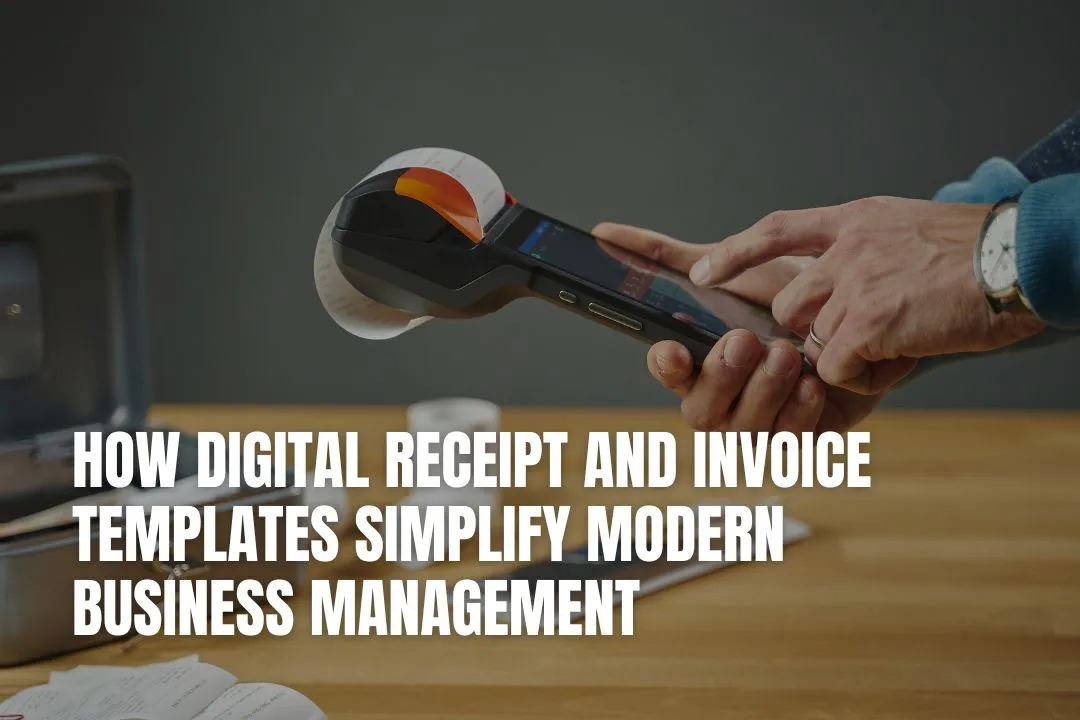
Receipts play an essential role in confirming completed transactions and maintaining transparency between businesses and customers. A professional receipt provides proof of payment and helps customers track their purchases, expenses, and warranties when needed. Digital receipt systems are becoming increasingly popular because they eliminate the inconvenience of paper receipts, which can easily be lost or damaged. Businesses can generate digital receipts instantly after transactions and send them through email or messaging platforms for customer convenience. This not only improves the customer experience but also supports environmentally friendly business practices by reducing paper waste. Organised digital receipts also make accounting and expense tracking easier for both businesses and customers. Companies that provide accurate and professional receipts demonstrate reliability and commitment to organised financial management, which strengthens customer trust and long-term business relationships.
Read more: https://www.zintego.com/receipt-template/receipt-maker
Small business owners and freelancers often manage multiple tasks at the same time, including customer communication, project management, marketing, and accounting. Because resources are limited, spending excessive time on administrative work can reduce productivity and slow business growth. Automated invoice and receipt systems provide a practical solution by simplifying repetitive tasks and reducing manual work. Users can store customer information, generate recurring invoices, and create receipts instantly without needing advanced accounting knowledge. This automation allows entrepreneurs to focus more on delivering quality services and growing their businesses instead of handling paperwork. Many digital platforms also support mobile access, enabling users to create invoices and receipts from smartphones or tablets while working remotely. As remote work and online businesses continue to grow globally, flexible financial management tools have become increasingly important for independent professionals and small companies.
Brand identity is an important part of customer perception, and financial documents contribute to that overall impression. Generic invoices and receipts may complete transactions, but customised templates create a more professional and memorable experience for customers. Modern invoice and receipt platforms allow businesses to personalise layouts, colours, fonts, and logos according to their branding needs. Some businesses may also require industry-specific templates that include additional details such as project milestones, labour costs, shipping information, or service breakdowns. Flexible customisation features help businesses maintain consistency while presenting financial documents in a clean and organised manner. When customers receive professional-looking invoices and receipts, they are more likely to view the business as trustworthy and well-managed. Strong branding across all business documents also improves recognition and strengthens customer confidence over time.
Read more: https://www.zintego.com/invoice-template
Cloud-based financial management systems have changed the way businesses store and access invoices and receipts. Instead of relying on physical storage or local computer files, cloud-based platforms allow users to securely save documents online and access them from any device with an internet connection. This flexibility is especially useful for remote teams, freelancers, and businesses with multiple employees or locations. Cloud storage also reduces the risk of losing important financial records due to hardware failures, theft, or accidental deletion. Many modern invoicing platforms offer backup systems, data encryption, and secure access controls that improve document protection and privacy. Businesses can easily share invoices and receipts with accountants, clients, or team members without printing or mailing physical copies. The convenience and security provided by cloud-based systems make them highly valuable for modern financial management.
Technology continues to improve the way businesses manage invoices and receipts. Artificial intelligence and automation are increasingly being integrated into financial software to simplify data entry, document processing, and financial analysis. Some advanced systems can automatically extract information from receipts, organise transactions, and generate reports with minimal human input. These innovations reduce administrative workload while improving accuracy and efficiency. Businesses that process large volumes of invoices and receipts benefit significantly from intelligent automation because it helps save time and reduce costly errors. Online platforms such as Zintego.com are contributing to this digital transformation by providing user-friendly tools that simplify invoicing and receipt creation for businesses of all sizes. As technology continues to evolve, businesses that adopt modern financial tools will likely experience stronger organisation, improved productivity, and better customer service.
Businesses should follow several important practices when creating invoices and receipts to maintain professionalism and organisation. Every invoice should include clear payment terms, accurate customer details, service or product descriptions, tax information, and due dates. Receipts should contain payment confirmation details, transaction dates, and business contact information for customer reference. It is also important to send invoices promptly after services are completed to encourage faster payments. Businesses should regularly review financial records and organise digital documents properly for accounting and tax purposes. Choosing consistent templates that match the company’s branding improves customer trust and recognition. Reliable invoicing and receipt systems not only simplify day-to-day operations but also support long-term financial stability and business growth.
Digital invoice and receipt templates have become essential tools for businesses seeking better financial organisation, professionalism, and efficiency. Traditional manual systems often create unnecessary administrative burdens, increase the risk of errors, and slow down payment processing. Modern online invoicing and receipt solutions simplify these tasks by offering automation, customization, cloud storage, and instant document delivery. Businesses can improve customer communication, maintain accurate financial records, and strengthen their brand image through professionally designed templates. As financial technology continues to evolve, digital invoicing and receipt management systems will become even more advanced and accessible for businesses of every size. Companies that adopt these modern tools are better prepared to manage growth, improve productivity, and create smoother financial experiences for both themselves and their customers.
You should switch to digital invoices because they save significant time, reduce manual errors, and present a more professional image to your clients. This clarity and professionalism often lead to faster payments and smoother financial tracking for your business.
Customised invoices reinforce your brand identity with every client interaction. By using your logo, company colours, and a consistent layout, you present a polished, professional image that builds trust and makes your business more memorable.
Yes, they are very important. Customers appreciate the convenience of a digital receipt that they can easily store and find later. It provides them with clear proof of payment and helps them track expenses, which improves their overall experience with your business.
Absolutely. Most modern digital invoicing platforms are cloud-based and offer mobile access. This allows you to create, send, and manage your financial documents from a smartphone or tablet, giving you the flexibility to run your business from anywhere.
The main benefit is security and accessibility. A cloud-based system protects your financial records from being lost due to hardware failure or theft. It also allows you to access your documents securely from any device with an internet connection, which is perfect for remote work.
