
December 8, 2023

December 5, 2025

Editorial Disclaimer
This content is published for general information and editorial purposes only. It does not constitute financial, investment, or legal advice, nor should it be relied upon as such. Any mention of companies, platforms, or services does not imply endorsement or recommendation. We are not affiliated with, nor do we accept responsibility for, any third-party entities referenced. Financial markets and company circumstances can change rapidly. Readers should perform their own independent research and seek professional advice before making any financial or investment decisions.
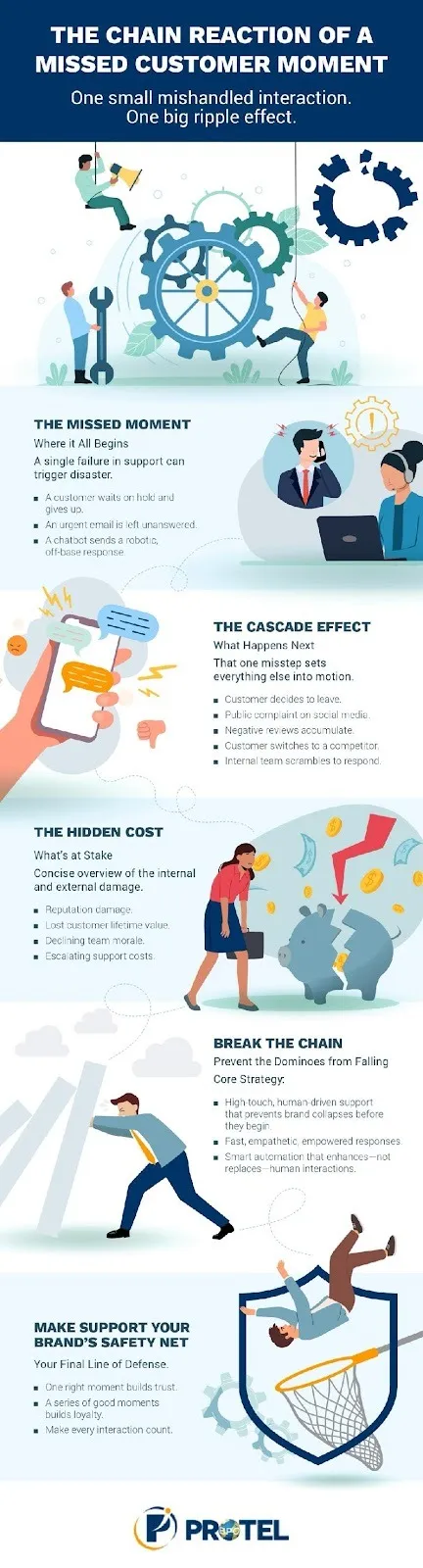
A single missed customer moment can feel small in the moment, but its effects rarely stay contained. Whether it is an unanswered question, a delayed response, or an overlooked concern, customers remember how they were treated. These moments influence satisfaction and trust. When businesses fail to recognise the ripple effect of a missed interaction, they risk turning manageable issues into larger organisational challenges.


Every missed moment begins with a customer who expected clarity, help, or acknowledgement. When that expectation is not met, frustration builds quickly. A customer attempting to resolve a simple issue may end up repeating information or searching for answers on their own. This early frustration shapes the tone of future interactions. Even small inconveniences can amplify stress, especially when customers are already dealing with time-sensitive needs.
Frustrated customers also tend to disengage more quickly. They may abandon a purchase, skip a renewal, or put off a decision. These quiet losses rarely show up as obvious red flags in reporting, which makes them particularly dangerous for businesses that rely on consistent customer flow.
When a customer’s need goes unanswered, the business loses more than a transaction. It loses a chance to build trust and strengthen the relationship. Customer moments often reveal deeper insights, including emerging trends, product concerns, or service gaps. Missing those insights limits a company’s ability to improve offerings and stay ahead of expectations.
Response quality matters as much as response time. Businesses that maximize touchpoints through clear communication build loyalty more effectively. Teams that lack coordination or responsiveness, however, unintentionally signal that customer concerns are low priority.
Missed customer moments frequently circle back into the organization as additional workload. When issues escalate, teams must spend extra time solving problems that could have been handled more easily at the start. This increases strain on support teams, creates communication bottlenecks, and interrupts workflows.
These challenges can compound if employees are unclear about responsibilities or lack the tools needed for timely response. Some businesses reduce this pressure by partnering with inbound call center services to ensure that calls, questions, and concerns are acknowledged promptly. Consistent availability reduces operational strain and keeps customer needs from slipping through the cracks.
Unresolved customer issues rarely stay private. A missed moment can lead to negative reviews, poor word-of-mouth, or social media complaints. Even small experiences can influence how a brand is perceived publicly. Over time, minor failures accumulate into larger reputation challenges that affect customer acquisition and retention.
The financial impact extends beyond a single lost sale. Customers who feel ignored often shift their loyalty, leading to long-term revenue loss. Rebuilding trust requires far more effort than maintaining it from the beginning.
A missed customer moment is never isolated. It triggers a chain reaction that influences customers, teams, and the wider business. Companies that prioritize responsiveness and thoughtful communication can interrupt this chain early and turn potential failures into opportunities for connection. For more information, look over the infographic below.
A missed customer moment is any time a customer's question, concern, or need goes unanswered or is handled poorly. It could be a delayed response to an email, an overlooked comment on social media, or an unresolved issue during a support call.
It creates a ripple effect internally. An issue that could have been solved simply at the start can escalate, demanding more time and resources from your teams. This leads to operational strain, communication problems, and disrupted workflows.
Not always. While you might lose an immediate sale, the more significant damage is often long-term. A customer who feels ignored is likely to switch to a competitor, leading to a loss of future revenue and loyalty.
The key is to prioritise responsive and thoughtful communication. Ensure your team has the tools and clear responsibilities to address customer needs promptly. This interrupts the chain reaction early and turns potential problems into opportunities to strengthen relationships.
