
April 3, 2024

July 29, 2026
Editorial Disclaimer
This content is published for general information and editorial purposes only. It does not constitute financial, investment, or legal advice, nor should it be relied upon as such. Any mention of companies, platforms, or services does not imply endorsement or recommendation. We are not affiliated with, nor do we accept responsibility for, any third-party entities referenced. Financial markets and company circumstances can change rapidly. Readers should perform their own independent research and seek professional advice before making any financial or investment decisions.
Fresh food reaches consumers only after moving through a carefully coordinated supply chain. From harvesting and packaging to transportation and retail storage, every stage influences product quality and shelf life. Even small disruptions in handling or temperature control can shorten freshness, increase food waste, and reduce customer satisfaction. Businesses that prioritise consistency throughout the distribution process are better positioned to deliver high-quality products while controlling operational costs.

Freshness begins immediately after produce is harvested. Fruits and vegetables continue to respire after they are picked, making prompt cooling an important step in slowing natural deterioration. Delays during harvesting, sorting, or packing can accelerate moisture loss and reduce product quality before shipments even leave the farm.
Careful handling also helps prevent bruising and other physical damage that may shorten shelf life. Standardised harvesting procedures, clean equipment, and efficient packing operations all contribute to maintaining product quality throughout the supply chain.
Transportation presents one of the greatest challenges to preserving freshness. Temperature fluctuations, excessive vibration, and extended transit times can all affect the quality of perishable goods.
Maintaining an uninterrupted cold chain helps reduce spoilage and extends shelf life. Refrigerated vehicles, continuous temperature monitoring, and clearly defined loading procedures all play important roles in protecting products while they are in transit. Shipment schedules should also be planned to minimise unnecessary delays that expose products to changing environmental conditions.
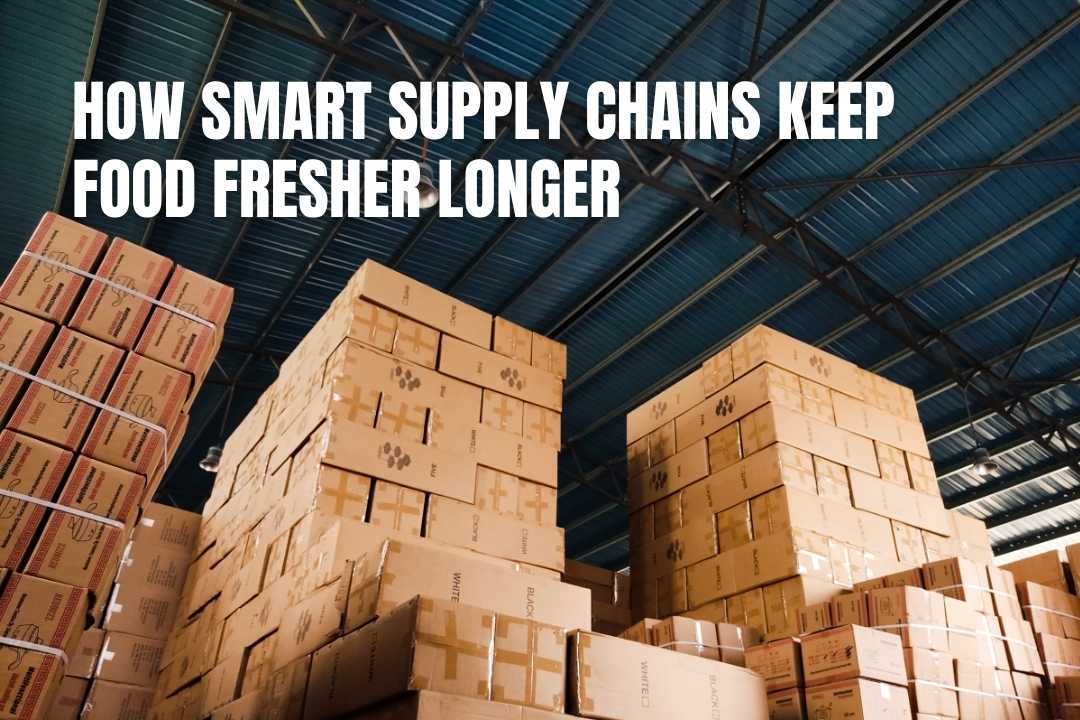
Packaging is equally important during transportation. Well-designed logistics packaging helps protect products from impact, supports airflow when needed, and reduces the likelihood of damage while goods move through warehouses and distribution centres, where warehouse safety measures govern how stock is handled and stacked.
Real-time data gives businesses greater control over product quality. Temperature sensors, inventory tracking systems, and shipment monitoring tools allow organisations to identify potential issues before products reach retailers or consumers.
Collecting performance data also helps businesses evaluate delivery times, storage conditions, and supplier reliability. Reviewing this information regularly allows managers to identify recurring problems, improve operational processes, and reduce unnecessary product loss.
Improved visibility also supports better communication between growers, distributors, transportation providers, and retailers. When each stage of the supply chain shares accurate information, problems can often be resolved more quickly.
The final stage of the supply chain is just as important as the first. Proper receiving procedures, refrigerated storage, and effective inventory rotation help preserve quality after products arrive at distribution centres or retail locations, and the packaging services chosen upstream determine how well stock survives that final handover.
Employees should inspect shipments for signs of damage, verify storage temperatures, and move products into appropriate refrigerated environments without unnecessary delays. Using first-in, first-out inventory practices also helps reduce waste by ensuring older products are sold before newer deliveries.
Keeping freshness intact requires attention throughout every stage of the supply chain. Careful harvesting, temperature-controlled transportation, protective packaging, and accurate inventory management all contribute to delivering higher-quality products to consumers. Businesses that consistently manage these processes strengthen customer confidence while reducing spoilage, supporting a more sustainable food distribution system. To learn more, feel free to look over the accompanying infographic.

The unbroken sequence of temperature-controlled storage and transport that keeps perishable goods within a set range from harvest to shelf. A single gap can undo the whole sequence.
As soon as practical, usually within hours. Fruit and vegetables continue to respire after picking, and that respiration is what drives moisture loss and deterioration.
Yes. Packaging protects against impact damage and, where the product needs it, supports airflow. Damaged produce deteriorates faster regardless of how well temperature was controlled.
Older stock is sold before newer deliveries. Without deliberate rotation, newer stock placed at the front gets picked first and older stock is written off.
Review temperature logs, transit times and supplier performance together. Recurring losses usually trace back to one specific handover rather than the supply chain as a whole.
