
April 12, 2022

October 19, 2026

Editorial Disclaimer
This content is published for general information and editorial purposes only. It does not constitute financial, investment, or legal advice, nor should it be relied upon as such. Any mention of companies, platforms, or services does not imply endorsement or recommendation. We are not affiliated with, nor do we accept responsibility for, any third-party entities referenced. Financial markets and company circumstances can change rapidly. Readers should perform their own independent research and seek professional advice before making any financial or investment decisions.
Today, having a real online presence is a must for construction companies. The industry once depended on referrals and local contacts, but using digital tools opens the door to more projects, lets you show your skills, and keeps you competitive.
A strong online footprint helps you grow in a digital-first market and makes your business easy to find and trust. If you want extra help building a solid base, check out builtfor.studio.
This guide walks through the key steps and simple tactics to build a clear, effective online footprint. From a pro website to social media and ads, you’ll see practical ways to stand out and reach the right clients.

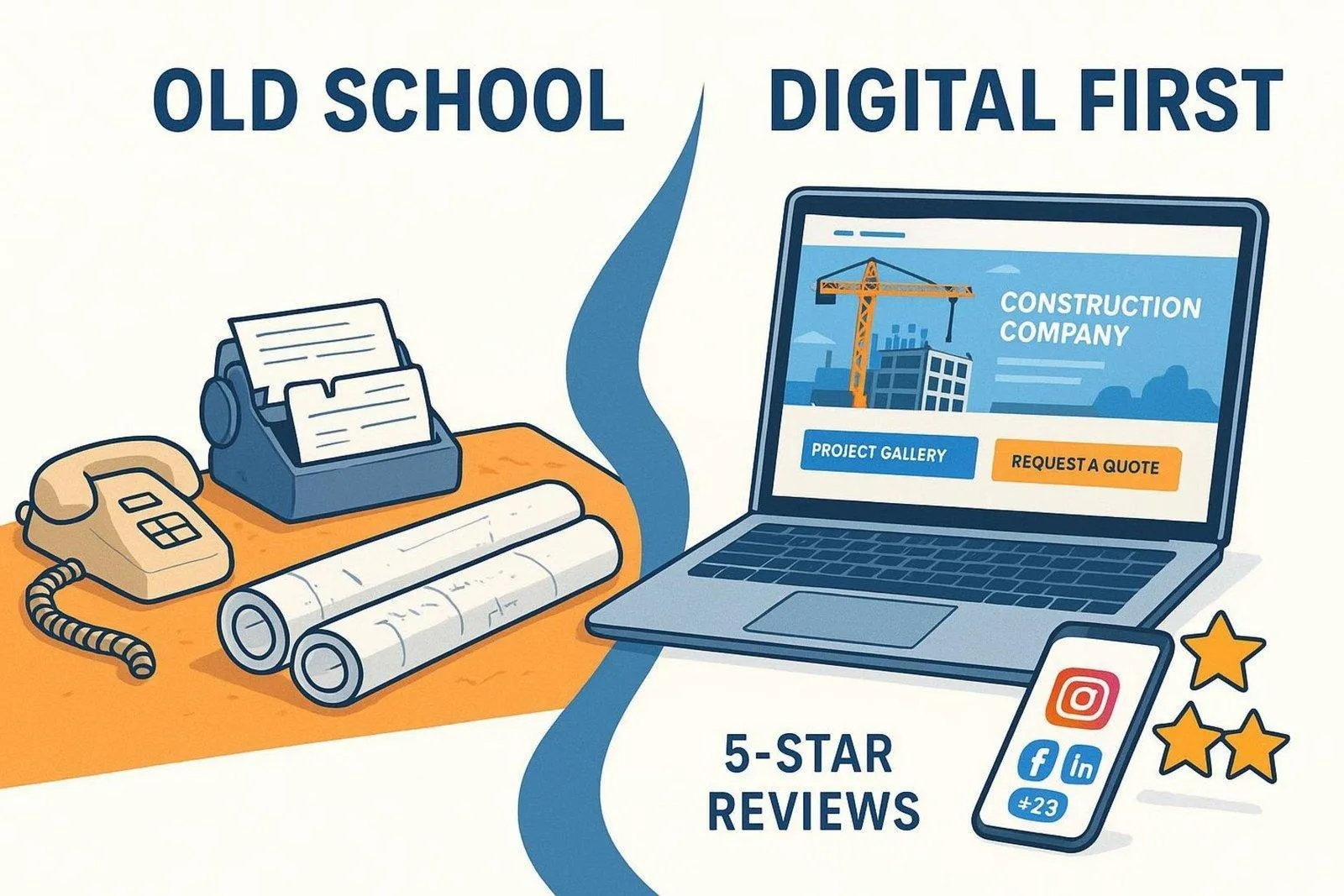
Even though construction is hands-on, what people see online impacts who they hire. Many clients start their search on the internet. Your online presence acts like a 24/7 storefront and sales rep. It helps people find you, see your work, and trust you before you even speak.
If you’re hard to find online, prospects will choose someone else. Competitors who post projects, collect reviews, and talk with their audience will win the work you could have had. Low visibility slows growth, makes hiring harder, and hurts your ability to compete. A weak online presence is like working behind a closed door in a field that values clear, open communication.
Your website is the main hub of your online presence and often the first thing people see. It should look clean, be easy to use, and quickly explain who you are, what you do, and how to contact you.
Any page could be the first one a visitor sees, so make each page helpful and action-focused.
Construction is visual. Use high-quality images and videos, including before-and-after shots. Share short stories about each project: the goals, any challenges, and the results. Add team bios, licenses, certifications, and awards to boost trust.
Many people browse on phones, so your site must work well on all screen sizes. Fast load times matter too. Slow pages cause people to leave. Tools like WordPress or Squarespace can help you build a clean, mobile-friendly site without heavy tech skills. Test it on different devices to give everyone a smooth visit.
A good-looking site won’t get leads if no one finds it. SEO helps your pages show up when people search for services you offer.
Local SEO matters a lot for construction. Target searches like “construction company near me” or “[city] general contractor.” Keep your Google Business Profile updated with correct info, photos, and regular reviews to show up in local results and the map listings.
List your business on sites like Yelp, Angi, Houzz, and Porch. Keep your Name, Address, and Phone the same across all listings. Update hours, links, photos, and descriptions. Your Google Business Profile is especially important. It highlights your reviews and helps people find you. Ask happy clients to leave reviews to build trust and boost visibility.
Social media helps you show your work, meet people where they are, and grow your name. It’s like word-of-mouth at scale.
Start with one or two platforms. Get good at them, then expand.
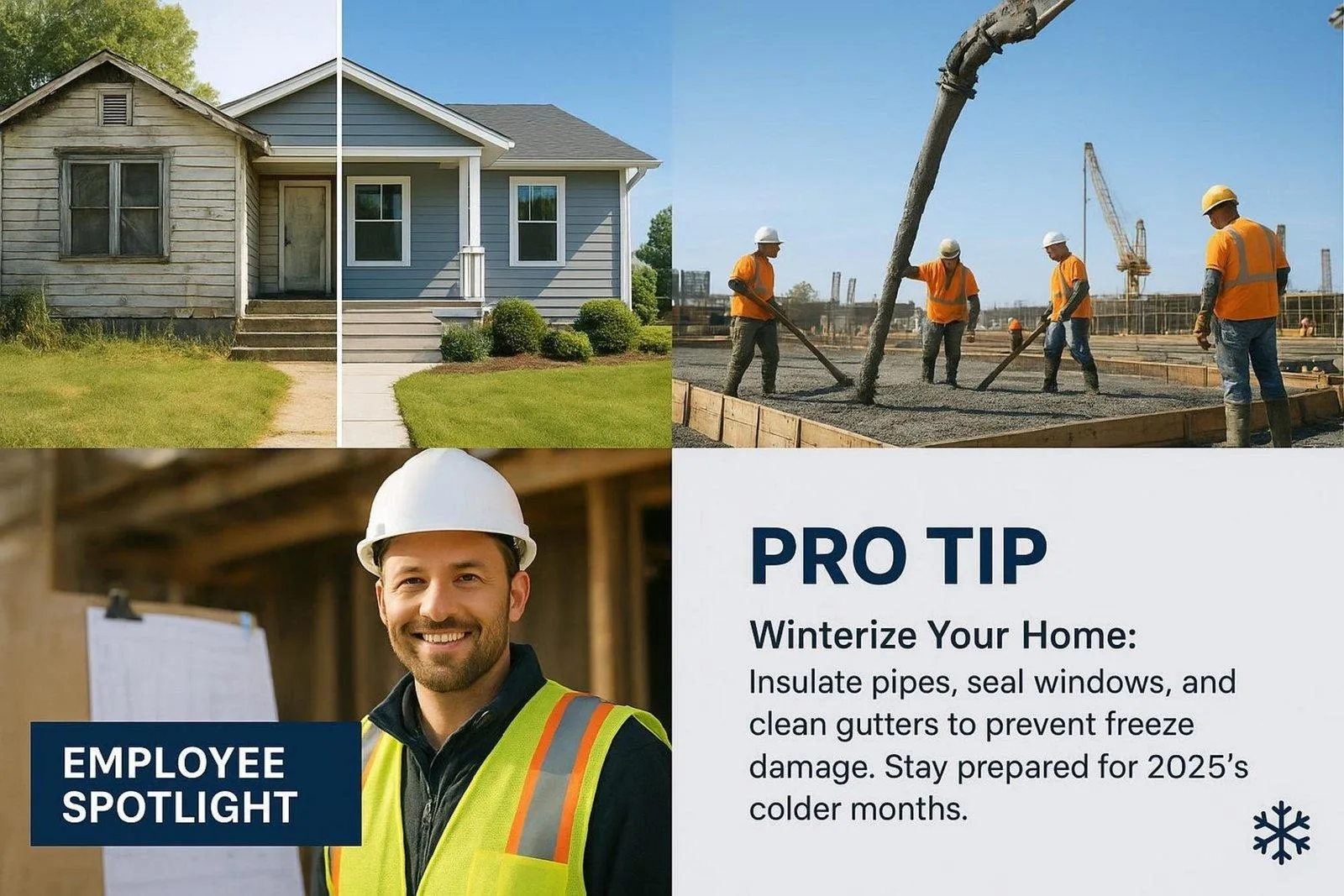
Add a clear call to action so people can visit your site or request a quote.
Post on a steady schedule, such as weekly project features or bi-weekly videos. Reply to comments and messages. Join local and industry groups. Use relevant hashtags. Ask clients to tag you in their photos. Real interaction builds trust and turns followers into leads.
Useful content helps people learn and builds trust. It shows how you work and why clients should choose you.
Share regular updates and full case studies. For updates, post milestones, challenges, and results. For case studies, cover the client goal, your plan, the work, the outcome, and a quote from the client. This helps people see your process and results.
Short videos of on-site work, time-lapses, or team moments add a human touch. Virtual tours let people get a feel for your finish quality. Post longer videos on YouTube, and use shorter clips on Instagram Reels or TikTok. Add clear titles and descriptions so people can find them.
Write posts that answer common questions, like planning a renovation, understanding codes, or choosing materials. Add an FAQ page to cover quick questions. Helpful content brings in search traffic, builds trust, and supports sales.
Trust matters a lot in construction. Reviews and testimonials are proof that you deliver. Manage them actively and show them in more than one place.
Ask happy clients for reviews on Google, Yelp, Houzz, and trade sites. Share direct links after project handoff. Use email or text to request feedback. Aim for at least one new five-star review on your Google Business Profile each month. For large commercial jobs, steady positive feedback still helps.
Reply to all reviews. Thank people for positive ones. For negative reviews, respond calmly and professionally, and show you want to make things right. Ignoring bad feedback can hurt your image.
Feature testimonials on your website, both on a dedicated page and on service pages. Share quotes on social media with project photos. Video testimonials are very persuasive. Showing real feedback across channels helps people choose you.
Organic growth is great, but paid ads can quickly put you in front of people who need your services now.
With PPC, you pay when someone clicks your ad. Google Ads lets you bid on keywords so your ads show at the top when people search. If you focus on home renovations, target phrases like “kitchen remodelling contractor” or “bathroom renovation near me.” Smart campaigns can bring qualified traffic and speed up lead flow.
Local Services Ads (LSAs) appear at the top of Google for local searches and show your rating, reviews, and a Google Guarantee badge. You pay when someone calls or messages you from the ad, which makes these ads cost-effective for local leads.
Facebook and Instagram ads let you target by location, interests, and job roles. Aim commercial ads at business owners and developers. Aim residential ads at homeowners within your service area. You only pay when people click, so you can reach the right audience without wasting budget.
After someone shows interest, email helps you stay in touch, build trust, and win the project later.
Grow your list with website forms, downloadable guides (like “A Homeowner’s Guide to Renovation”), and trade show signups. Split your list by client type (residential vs. commercial), service interest (new builds vs. renovations), or stage (research vs. ready to start). Send messages that match each group’s needs.
Keep emails clear, useful, and personal. Add strong visuals and direct calls to action.
Building online visibility is ongoing. To see what works and get a good return, keep watching your data and adjust your approach over time.
Use Google Analytics for website traffic and goals. Facebook, Instagram, and LinkedIn have built-in insights for audience and content performance. Google Ads and Facebook Ads Manager show campaign results. Many CRMs pull data from these tools so you can see marketing and sales in one place.
Data only helps if you act on it. If a page has a high bounce rate, the content may miss the mark or load too slowly. If a post gets lots of likes but few clicks, update the call to action. See which topics and formats bring leads, then do more of that. Keep testing and adjusting to grow results over time.
An online presence is crucial because many clients begin their search for construction services on the internet. It helps them discover your business, view your past work, and establish trust before they even speak with you, acting as a 24/7 storefront.
Your website should clearly list your services and service areas, have easy-to-find contact information, include a strong portfolio with high-quality photos and videos, and feature clear calls to action on every page to encourage enquiries.
To appear in local search results, you should optimise your website with local keywords, keep your Google Business Profile updated with accurate information and photos, and actively encourage clients to leave reviews on your profile. Listing your business on other directories also helps.
Instagram is excellent for showcasing visual project results, Facebook helps with local community engagement, and LinkedIn is ideal for B2B networking and commercial work. YouTube is great for longer project tours, and TikTok can show quick, creative clips of your team and process.
Focus on content that demonstrates your expertise and shows your work, such as before-and-after project photos, progress videos, employee spotlights, quick tips, safety advice, and client testimonials. Blog posts answering common questions also build trust and attract search traffic.
