
August 4, 2025


Editorial Disclaimer
This content is published for general information and editorial purposes only. It does not constitute financial, investment, or legal advice, nor should it be relied upon as such. Any mention of companies, platforms, or services does not imply endorsement or recommendation. We are not affiliated with, nor do we accept responsibility for, any third-party entities referenced. Financial markets and company circumstances can change rapidly. Readers should perform their own independent research and seek professional advice before making any financial or investment decisions.
Employees want to feel valued for their work. Pay matters, but recognition plays a different role. It shows that effort is seen and appreciated. When people feel noticed, they are more likely to stay engaged and perform at a higher level.


Recognition has a direct effect on motivation. When employees receive positive feedback, they are more likely to repeat strong performance. This creates a cycle where good work leads to more good work.
Lack of recognition can lead to disengagement. Employees may feel that their efforts go unnoticed, which can reduce productivity over time.
Simple actions, such as a thank you or public acknowledgement, can have a lasting impact. Consistent recognition builds a positive work environment.
Recognition can take many forms. Verbal praise, written notes, and team announcements all help highlight achievements. Public recognition during meetings can also reinforce positive behaviour.
Peer recognition programs allow employees to acknowledge each other. This can strengthen team connections and create a sense of shared success.
Recognition should be timely. Waiting too long can reduce its impact. Quick feedback helps link the action to the reward.
Rewards add another layer to recognition. They provide a tangible way to show appreciation. These can include bonuses, gift cards, or extra time off.
Non-monetary rewards can also be effective. Experiences, team events, or small items can create positive memories. For example, sending gourmet caramel apples to celebrate a team milestone can add a personal touch.
Rewards should match the achievement. Clear criteria help employees understand what is expected and how to earn rewards.
Recognition and rewards should connect to business goals. When employees see how their work supports larger objectives, they are more likely to stay focused.
Managers should define clear performance targets. These targets should be realistic and measurable. Linking rewards to these goals creates a direct connection between effort and outcome. Regular reviews help track progress and adjust goals as needed.
Poorly designed programs can create confusion or frustration. Inconsistent recognition may lead to perceptions of favouritism. Clear guidelines help avoid this issue.
Overusing rewards can reduce their value. If every action receives a reward, the impact may decrease over time. Balance is important.
Feedback should remain genuine. Recognition that feels forced or routine may not have the intended effect.
Recognition works best when it becomes part of daily culture. Leaders should model this behaviour by regularly acknowledging effort and results.
Encouraging managers and team members to give feedback creates a more supportive environment. Over time, this can improve communication and trust. A culture that values recognition helps employees feel connected to their work and their team.
Employee recognition and performance rewards play a key role in building strong teams. Clear feedback, meaningful rewards, and consistent practices can support higher engagement and better results. When employees feel valued, they are more likely to contribute at their best. To learn more, check out the infographic below.
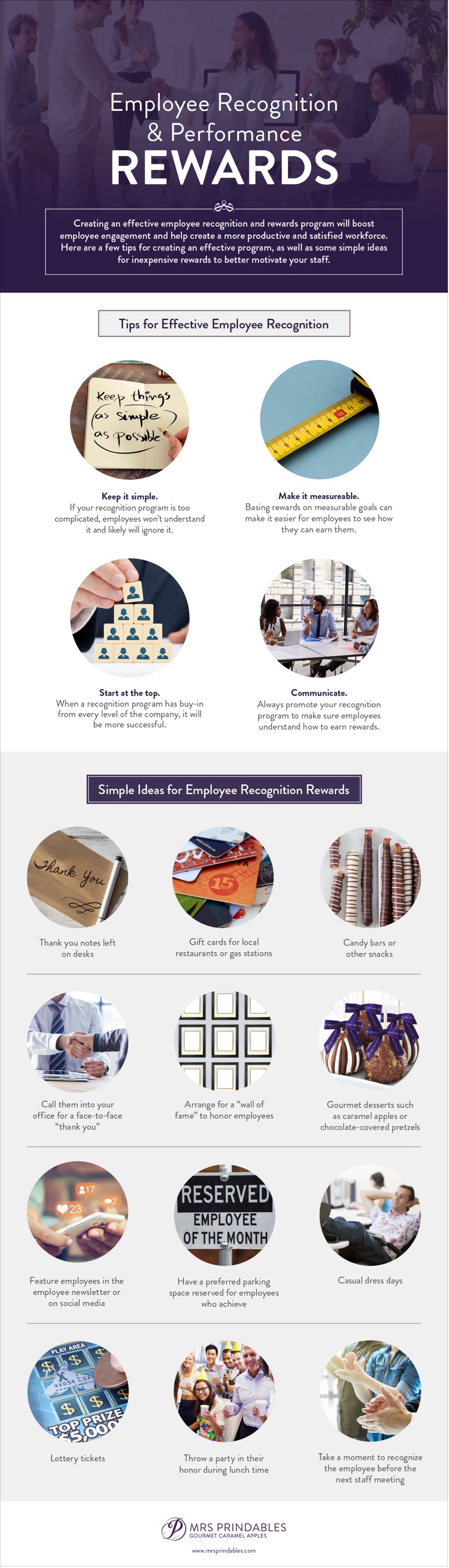
Employee recognition is vital because it directly fuels motivation and engagement. When your team members feel valued for their contributions, they are more likely to perform at a high level, stay with the company longer, and contribute to a positive workplace culture. It shows that you see their effort, not just the output.
You don't need a large budget to show appreciation. Simple gestures like timely and specific verbal praise during a team meeting, a handwritten thank you note, or public acknowledgement in a company-wide email can be incredibly effective at making your employees feel seen and valued.
To ensure fairness, you must establish clear and transparent criteria for earning rewards. Everyone on the team should understand what is expected of them and how their performance links to specific rewards. Consistency is key to avoiding any perception of favouritism.
Not at all. While bonuses are appreciated, non-monetary rewards can often be more memorable and personal. Consider offering extra paid time off, professional development opportunities, or unique team experiences. These types of rewards can build stronger team connections and show you care about your employees' well-being.
Building a culture of appreciation starts from the top. As a leader, you should model the behaviour by regularly and genuinely acknowledging effort and results. Encourage peer-to-peer recognition programs and empower managers to give feedback consistently, making it a normal part of your daily operations.
