November 16, 2026

Editorial Disclaimer
This content is published for general information and editorial purposes only. It does not constitute financial, investment, or legal advice, nor should it be relied upon as such. Any mention of companies, platforms, or services does not imply endorsement or recommendation. We are not affiliated with, nor do we accept responsibility for, any third-party entities referenced. Financial markets and company circumstances can change rapidly. Readers should perform their own independent research and seek professional advice before making any financial or investment decisions.
Owning a private medical practice involves responsibilities that extend far beyond treating patients. Physicians must manage staffing, finances, regulatory requirements, and daily operations while maintaining quality care. Poor business decisions can create financial pressure, disrupt appointments, and limit opportunities for growth. A successful practice needs clear procedures, reliable financial oversight, and systems that support both employees and patients.

Private practices face ongoing expenses, including employee salaries, equipment, rent, insurance, and medical supplies. Without accurate financial records, owners may struggle to identify rising costs or predict cash flow shortages.
Review monthly revenue, operating expenses, and outstanding insurance claims. Tracking accounts receivable can reveal payment delays that affect the practice’s ability to cover routine obligations.
Owners should also maintain cash reserves for unexpected equipment repairs or temporary revenue declines. Regular financial reviews help identify problems before they become serious.
Employee performance directly affects patient satisfaction and operational efficiency. Receptionists, medical assistants, billing specialists, and clinicians need clearly defined responsibilities. Scheduling deserves particular attention. Overbooking can increase waiting times and employee stress, while excessive appointment gaps reduce revenue opportunities.
Analyze appointment duration, cancellation rates, and patient demand to develop realistic schedules. Cross-training administrative employees can also help maintain operations during absences. Regular staff meetings provide opportunities to address recurring problems and improve communication between clinical and administrative teams.
Medical practices face risks involving patient safety, professional liability, data privacy, and workplace operations. Appropriate insurance coverage is an important part of financial planning. For example, physicians researching medical malpractice insurance in California should consider their specialty, claims history, coverage limits, and applicable state requirements.
Practice owners should also maintain written procedures for patient documentation, informed consent, and incident reporting. Periodic reviews of insurance policies and risk management procedures can help identify coverage gaps as services expand.
Electronic health records, appointment systems, and billing platforms influence how efficiently a practice operates. Poorly integrated software can create duplicate work and increase documentation errors. Evaluate whether existing systems support accurate patient records, secure communication, and timely claim submissions.
Employee training is equally important. Staff members who lack confidence using software may develop inefficient workarounds that create additional administrative problems. Technology reviews should also address cybersecurity protections, access permissions, and reliable data backups.
Expanding a private practice requires careful financial and operational evaluation. Adding providers, extending office hours, or opening another location can increase revenue potential but also creates additional expenses.
Before expanding, examine patient demand, staffing capacity, available space, and expected operating costs. Growth decisions should reflect realistic financial projections rather than assumptions about future appointments. Practice owners should also monitor patient feedback and referral patterns to identify service gaps.
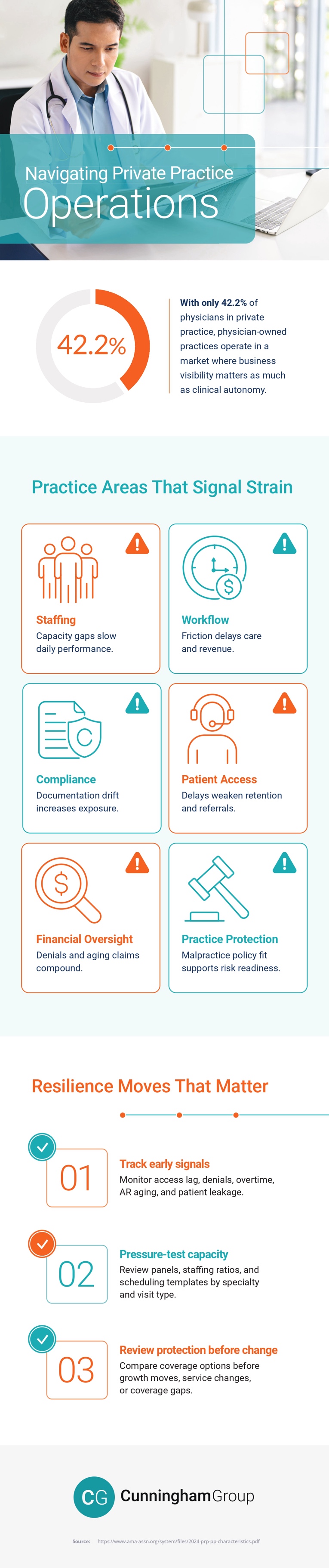
Running a private practice requires balancing clinical responsibilities with sound business management. Strong financial controls, effective staffing, appropriate liability protection, and dependable technology help reduce operational problems. Consistent performance reviews allow practice owners to address weaknesses and pursue growth without compromising care quality. Look over the infographic below to learn more