
February 17, 2025

July 29, 2026
Editorial Disclaimer
This content is published for general information and editorial purposes only. It does not constitute financial, investment, or legal advice, nor should it be relied upon as such. Any mention of companies, platforms, or services does not imply endorsement or recommendation. We are not affiliated with, nor do we accept responsibility for, any third-party entities referenced. Financial markets and company circumstances can change rapidly. Readers should perform their own independent research and seek professional advice before making any financial or investment decisions.
Every acquisition brings new opportunities, but it also brings another CMS.
A headless CMS won't eliminate every post-merger integration challenge, but it can provide a foundation for consolidating content operations over time. The right platform allows organisations to onboard new brands without disrupting existing ones, reuse content where it makes sense, and scale without adding another CMS to the portfolio.
In this article, we'll compare 5 headless CMS platforms that are well suited for companies growing through mergers and acquisitions.

One brand runs on WordPress. Another has a custom-built CMS that wasn't designed to support a growing enterprise. Before long, engineering teams are maintaining multiple content stacks, editors are duplicating work across systems, and launching a company-wide campaign requires coordinating half a dozen disconnected platforms.
After an acquisition, the main goal is to reduce complexity without disrupting the business. That usually means running multiple systems in parallel for a while, standardising where it makes sense, and giving newly acquired teams enough autonomy to keep publishing while the integration happens behind the scenes.
A headless CMS can make that process much smoother, but only if it's designed to support the realities of post-merger integration. Here are the capabilities worth prioritising.
Very few organisations can afford to replace every CMS immediately after an acquisition. A better approach is to migrate brands gradually while existing websites remain live. Platforms that support phased migrations reduce project risk and allow teams to modernise at a sustainable pace.
Every acquired company has its own way of working. Editorial teams may have different approval processes, content structures, and publishing schedules that shouldn't disappear overnight. The ideal CMS provides a shared platform for IT while allowing individual brands to maintain their own spaces, workflows, and permissions.
Acquisitions often create duplicate content. Product descriptions, legal disclaimers, company information, and marketing assets quickly become inconsistent across brands. Structured content makes it easier to reuse and update shared information without editing it in multiple places.
A newly acquired business rarely arrives with the same technology stack. Different ecommerce platforms, CRMs, DAM systems, and marketing tools need to work together long before they're fully consolidated. While organisations picking an ecommerce CMS typically focus on powering a single storefront, companies growing through M&A need a headless CMS that can integrate with multiple commerce platforms and existing business systems simultaneously. An API-first architecture makes those integrations far easier while supporting a gradual, lower-risk consolidation strategy.
As the number of brands grows, so does the need for consistency. Role-based permissions, approval workflows, audit trails, and publishing controls help organisations maintain governance without slowing down local teams or creating unnecessary bottlenecks.
A great CMS should make the next acquisition easier. Look for a platform that can onboard new brands, websites, languages, and content teams without requiring another major architectural overhaul.
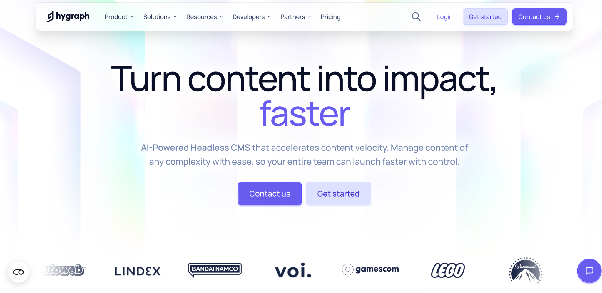
Best for: Consolidating acquired brands without forcing them into the same content model.
Every acquisition adds another website, another content model, and another set of editorial processes. Hygraph is designed to bring those brands together on a single platform while allowing each one to retain its own identity. Its approach to omnichannel content management enables organisations to manage structured content from one central source and deliver it consistently across websites, mobile apps, ecommerce platforms, customer portals, and other digital experiences. Instead of treating every acquisition as another CMS to maintain, organisations can onboard brands into isolated content spaces with independent schemas, permissions, and workflows.
Why it's a strong choice for M&A
Hygraph is one of the few headless CMS platforms that positions multi-brand management as a core use case rather than an afterthought. Organisations can migrate brands incrementally, reuse structured content where it makes sense, and maintain centralised governance without forcing every acquired business into a single content structure. That flexibility makes post-merger integrations significantly easier to manage.
Key features
Pricing: Free plan available; paid plans start at $199/month.
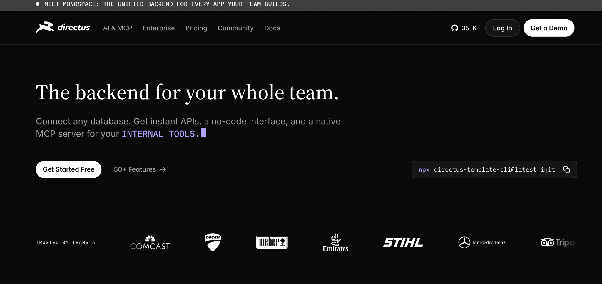
Best for: Modernising legacy content systems without migrating everything immediately.
One of the biggest challenges after an acquisition is to figure out what to do with the systems you've inherited. Directus approaches this differently by sitting directly on top of existing SQL databases instead of requiring organisations to move everything into a new repository. Existing content becomes available through modern APIs while remaining in place.
Why it's a strong choice for M&A
Many acquisitions involve legacy systems that still power business-critical websites or applications. Directus allows organisations to modernise those systems gradually rather than committing to a large-scale migration from day one. That can significantly reduce project risk while buying teams time to plan a longer-term consolidation strategy.
Key features
Pricing: Free open-source version; enterprise plans available.
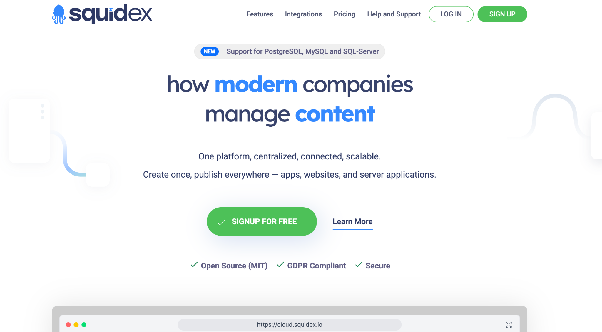
Best for: Organisations managing multiple business units from one platform.
Not every acquisition needs to become part of the same content operation immediately. Squidex is built around multi-tenancy, allowing organisations to create independent applications with their own schemas while sharing infrastructure and administration behind the scenes.
Why it's a strong choice for M&A
For companies acquiring several businesses over time, Squidex offers a practical way to centralise infrastructure without removing operational independence. Individual brands can continue working in isolated environments while IT manages a single platform instead of multiple disconnected CMS installations.
Key features
Pricing: Open source; managed cloud plans available.
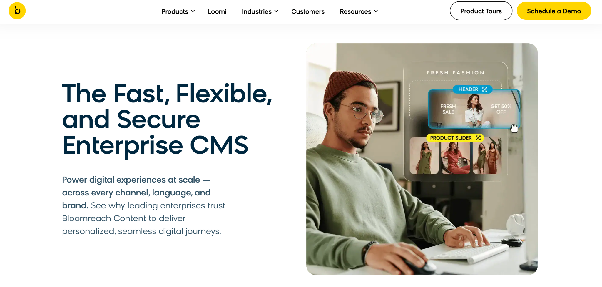
Best for: Retailers and commerce companies expanding through acquisitions.
When acquisitions add new product lines and ecommerce brands, content management quickly becomes intertwined with the customer experience. Bloomreach Content combines headless content management with AI-powered search, merchandising, and personalisation to help organisations manage both content and commerce from a unified platform.
Why it's a strong choice for M&A
Commerce businesses often need to consolidate product information, marketing content, and digital storefronts without losing each brand's unique identity. Bloomreach helps centralise these operations while supporting personalised experiences across multiple brands and sales channels.
Key features
Pricing: Custom enterprise pricing.
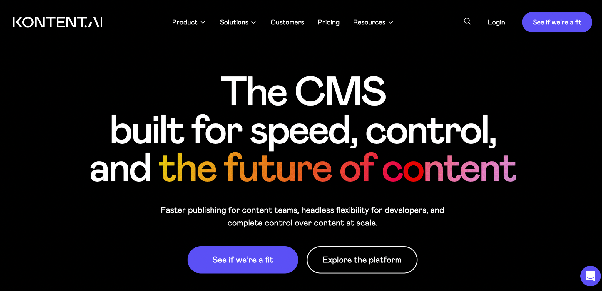
Best for: Global organisations bringing together distributed content teams.
Technology isn't always the hardest part of an acquisition. Once systems are connected, teams still need a consistent way to plan, review, translate, and publish content across brands and regions. Kontent.ai focuses on making those editorial processes easier to coordinate.
Why it's a strong choice for M&A
Organisations integrating multiple marketing teams often need stronger governance before they need additional features. Kontent.ai provides structured workflows, reusable content, multilingual publishing, and centralised oversight, making it easier to standardise operations while allowing regional teams to retain their autonomy.
Key features
Pricing: Custom pricing.
Some organisations prefer to consolidate every acquired brand onto a single platform immediately, while others take a phased approach. Choose a CMS that supports your migration timeline rather than forcing a complete rebuild.
Acquired companies often have established editorial processes and content structures. Look for a platform that allows individual teams to maintain autonomy while centralising governance and infrastructure.
Today's acquisition may not be the last. A scalable CMS should make it easier to onboard future brands without introducing additional complexity or infrastructure.
Your CMS should connect seamlessly with CRMs, ecommerce platforms, DAM systems, analytics tools, and other business-critical applications that may differ across acquired organisations.
The most successful post-merger content operations strike a balance between centralised oversight and local control. Features like role-based permissions, reusable content models, and structured workflows help organisations achieve both.
Choosing a headless CMS for a growing enterprise involves more than comparing feature lists. Companies expanding through mergers and acquisitions need platforms that can simplify integration, reduce infrastructure complexity, and support multiple brands without limiting their independence.
Whether your priority is modernising legacy systems, consolidating content operations, or creating a scalable foundation for future acquisitions, the right CMS should help your organisation integrate new businesses more efficiently while maintaining consistent digital experiences across every brand.
A headless CMS separates where content is stored from how it is displayed, delivering content through APIs to any front end. That structure makes it well suited to companies running many brands and channels after a merger.
Acquisitions add new websites, content models, and teams. A headless CMS lets organisations consolidate content operations gradually, share infrastructure, and keep each brand independent without maintaining a separate CMS for every acquisition.
Yes. Platforms that support phased, incremental migration let you move brands one at a time while existing websites stay live, which reduces risk and spreads the work over a sustainable timeline.
Hygraph is built around multi-brand use cases, with isolated content spaces, brand-specific schemas, and centralised governance. Squidex and Kontent.ai also handle multiple business units well, depending on your priorities.
Pricing varies widely. Directus and Squidex offer free open-source versions, Hygraph starts around $199 per month for paid plans, and Bloomreach and Kontent.ai use custom enterprise pricing.
