
April 12, 2022

July 8, 2026
Editorial Disclaimer
This content is published for general information and editorial purposes only. It does not constitute financial, investment, or legal advice, nor should it be relied upon as such. Any mention of companies, platforms, or services does not imply endorsement or recommendation. We are not affiliated with, nor do we accept responsibility for, any third-party entities referenced. Financial markets and company circumstances can change rapidly. Readers should perform their own independent research and seek professional advice before making any financial or investment decisions.
There are very few businesses that, from the outset, settle into huge office spaces, vast warehouses, or large rental units. Most have very humble beginnings, often starting in the business owner’s house because any money they have goes straight into growing the company. With time and business growth, this can change. If you have found yourself in a position where you have outgrown your home, the hunt for a better location begins.
However, what do you opt for? This naturally depends on the business model you are working with, but one option that is growing desirable for many is studio space. Curious to learn more? We cover everything you need to know about why this rental option is worth it.

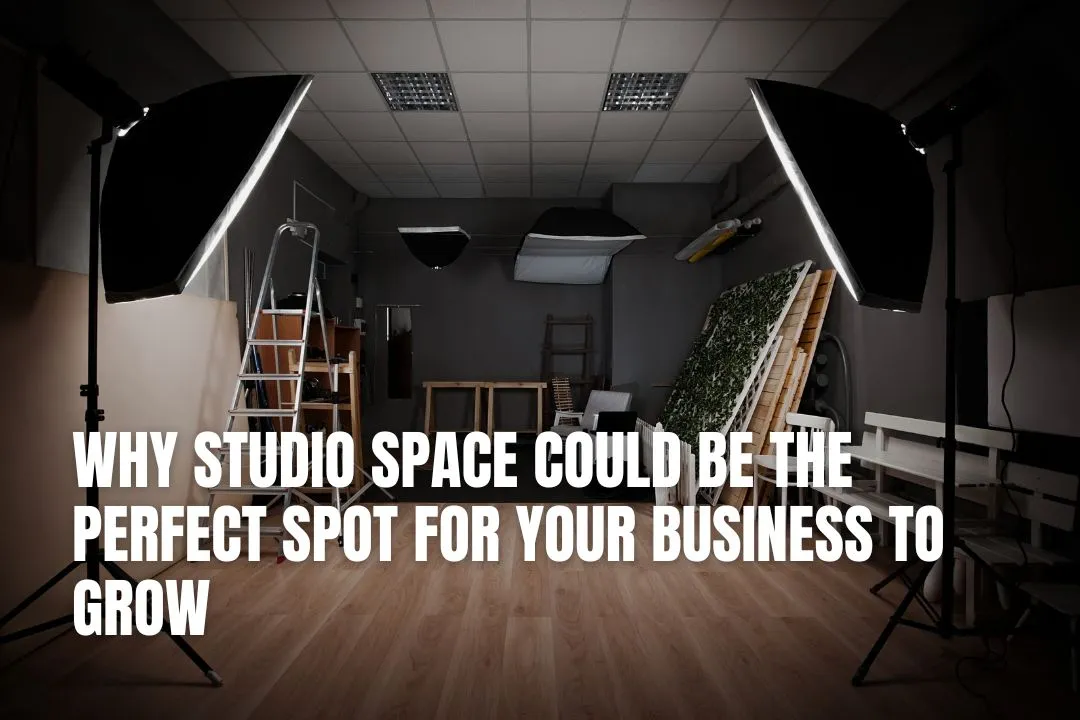
One of the biggest benefits of signing a rental agreement for studio space is its versatility. For those who require a functional office space and the ability to carry out essential creative tasks, such as media production, a traditional office won’t meet these needs. However, a studio space offers the perfect blend. With better lighting, a better artistic layout, and a blank canvas that lets you bring what you need, the space can truly let your team shine, whether they are doing office admin or filming.
Need a warehouse instead, and believe a studio space can’t provide? Think again. Enjoy all the elements a traditional warehouse offers, like high ceilings and vehicle access, on a much smaller, manageable scale, allowing steady growth. You’ll even have access to breakout areas, meeting rooms, and showers at the best studio spaces.
Grow too slowly, and you risk your business becoming stagnant. Grow too fast, and you could bankrupt your business. The balance is delicate. You want to find a middle ground between a large space that allows your team to work comfortably to the best of their abilities and a small space that doesn’t cost a small fortune. Studio space bridges this gap. Most offer very competitive pricing, along with perks that traditional office space doesn’t usually offer. For example, you may pay a smaller deposit or choose a more flexible contract. This is ideal for businesses looking to grow, as it offers an opportunity without much risk. When you need to grow again, you’ll likely find options where you already are, allowing you to move into a bigger space without too much hassle.
One of the best things you likely found about working from your own home was the ability to act upon ideas within seconds, no matter what time of day it was. You may believe that renting office space limits this for you. This isn’t the case at all with studio space. Whenever inspiration strikes, most studio spaces allow you 24/7 access. The bonus of having this space over your own home, now, though, is that you can more easily separate work and home. Whatever your mindset, whether you want to switch off at 5 pm every day or act on a thought at 1 am, studio space works for both types of business owners.
Moving into a bigger space can be quite daunting, as it brings about significant change for you and your team. This is where having the right support is essential. You want to know that if a problem occurs, there is someone on-site who can help find a solution. Most studio spaces offer dedicated members of staff who are on-site as part of your contract to provide help where necessary. Knowing you have support when needed lets you focus solely on growing your business.
It can also relieve a lot of stress and burden. Running a studio requires time and energy that you might not have, and understandably. Trying to solve problems such as internet outages, maintenance issues, and security concerns, on top of scheduling cleaning, utilities, deliveries, and more, doesn’t leave you much time for your actual job. You’ve moved out of your home to relieve stress, and knowing that you won’t replace it with another type of stress by choosing the right location can be a welcome thought.
Business profits can go up just as much as they can go down, and for SMEs, startups, and growing businesses, especially, those first few years will see plenty of this, meaning budgeting couldn’t be more important. Studio space was made for those budget-minded individuals. You don’t face the same financial constraints as a typical office would demand of you before you’ve even moved in, such as large deposits, legal fees, and contracts tying you into lengthy commitments. The best studio spaces tend to only ask for a two-month deposit rather than six, and for a small business trying to make roots in a bigger location, this can make a major difference.
When revenue fluctuates or growth stagnates, studio spaces help businesses navigate rocky periods, reducing the financial risk that comes with them. Flexible contracts, such as rolling agreements, and scalable spaces mean that if circumstances change unexpectedly, you can easily adjust your setup and downsize if required. As studio spaces are blank canvases, you can also more easily spread out the cost of furnishing the area at a pace that better suits you.
The success of hybrid businesses in recent years is there for all to see, yet many are still struggling to finalise their setup. That’s because they’ve yet to come across studio space. Compared to a traditional office, studio space offers the most flexibility. Because it is more open-plan and adaptable, you will be able to easily rearrange layouts if more team members come in, for example. As there’s the possibility that your team won’t be using the space every single day, because of the cost-effectiveness of studio space, you won’t feel frustrated about paying all this money for a space no one uses.
Not at all. While they are great for creative tasks, their versatility makes them suitable for many business models. You can use them as a functional office, a small warehouse with high ceilings, or a combination of all three.
Studio spaces are designed to be budget-friendly. They typically require smaller deposits than traditional offices, offer flexible or rolling contracts, and allow you to furnish the area at your own pace, which helps manage your expenses more effectively.
Yes, most studio spaces offer 24/7 access. This gives you the freedom to work on your schedule, whether you prefer a standard 9-to-5 or need to act on a late-night idea, without blurring the lines between home and work.
You can expect significant on-site support. Most studio spaces have dedicated staff to handle things like maintenance, security, cleaning, and deliveries. This support system lets you concentrate on growing your business instead of managing the property.
Absolutely. The adaptable, open-plan layout of a studio is perfect for a hybrid team. You can easily rearrange the space to suit how many people are in the office on any given day, and its cost-effectiveness means you are not overpaying for a space that is not always full.
