November 24, 2025

December 22, 2025
Editorial Disclaimer
This content is published for general information and editorial purposes only. It does not constitute financial, investment, or legal advice, nor should it be relied upon as such. Any mention of companies, platforms, or services does not imply endorsement or recommendation. We are not affiliated with, nor do we accept responsibility for, any third-party entities referenced. Financial markets and company circumstances can change rapidly. Readers should perform their own independent research and seek professional advice before making any financial or investment decisions.
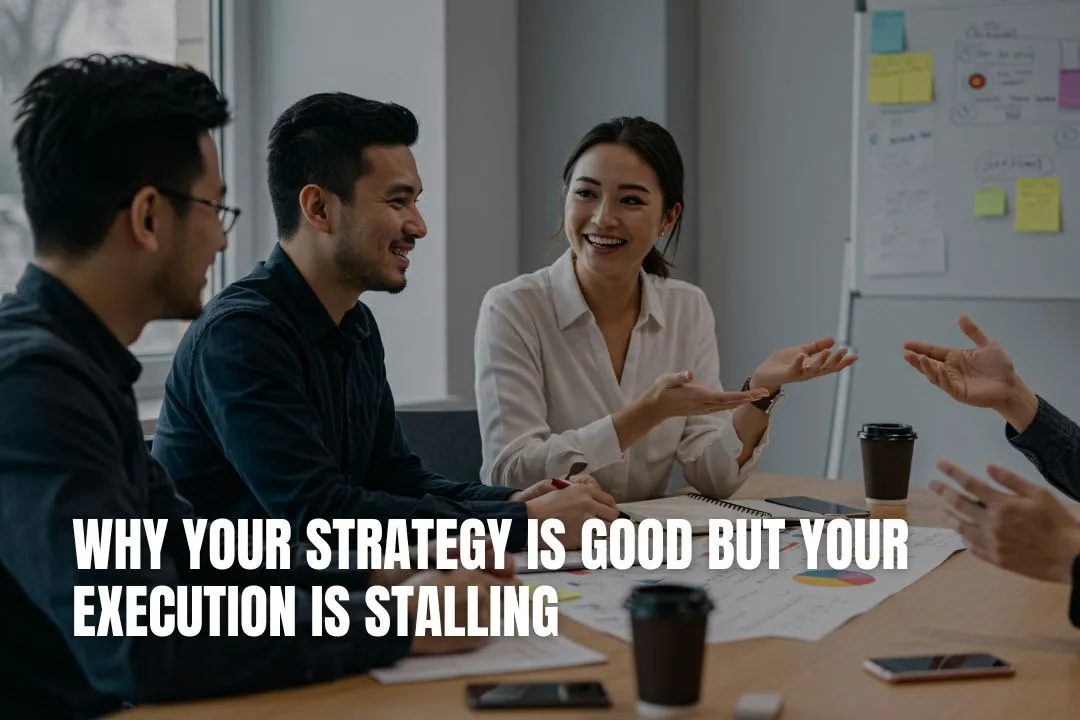
Most five-year plans fail. They don’t crumble because the market conditions shifted unexpectedly or because the product wasn't viable. They fail because of internal friction.
When a company is young, execution is almost automatic. There is a natural "family feel" where everyone knows what the person next to them is doing. Communication flows freely, and the mission is clear because you are all sitting in the same room. But as you scale, that natural alignment evaporates. It gets replaced by silos, departmental politics, and misaligned incentives.
Suddenly, you have a brilliant strategy on paper, but the people responsible for executing it are rowing in different directions. The harsh reality is that you cannot strategise your way out of a cultural problem. To bridge the gap between a high-level vision and on-the-ground execution, you must intentionally manufacture trust.

The transition from a scrappy startup to a structured enterprise is dangerous. In the early days, trust is implicit. You hire friends, or friends of friends, and you bond over the shared trauma of trying to keep the lights on.
However, as headcount grows, that implicit trust dilutes. You introduce middle management. You create specialised departments. Marketing starts complaining that Sales isn't closing leads; Sales complains that the Product team isn't building what customers want; the Product team complains that Engineering is too slow.
This is where execution stalls. The strategy might be sound, perhaps you identified the perfect market opportunity, but the organisation lacks the structural alignment to seize it. Instead of fighting the competition, your teams start fighting each other for resources, credit, and attention. This internal friction acts as a tax on every decision you make, slowing down velocity and killing innovation.
When leaders notice this friction, the knee-jerk reaction is often to schedule a team-building event or a company retreat, hoping that “forced time” away from the work would fix things automatically. The logic seems sound: if we get everyone out of the office to have some fun, they’ll bond, and the friction will disappear.
Unfortunately, this rarely works.
The market is flooded with providers offering "generic fun" - bowling nights, trust falls, or escape rooms. While these activities might provide a temporary morale boost, the effects vanish the moment the team returns to the office. Why? Because you cannot solve deep-seated structural issues with a cocktail hour.
Generic team building treats the symptom (low morale) rather than the disease (lack of trust and alignment). It assumes that if people like each other, they will work well together. But in a high-stakes business environment, "liking" your colleague is less important than understanding how to collaborate with them under pressure. You need a partner who understands the psychology of performance, not just event planning.
To truly fix the execution gap, you need to move beyond entertainment and toward behavioural science. This requires a data-driven approach that analyses team dynamics and individual personality traits.
This is why I recommend seeking out specialised corporate team-building firms that are experts at understanding these dynamics. Companies like Jambar Team Building in Singapore have pioneered this approach. They move beyond simple icebreakers to facilitate deep-level structural alignment.
Unlike standard vendors who simply host an event, specialised firms focus on the specific behavioural outcomes needed to stop departments from competing. They use data to identify where the communication breakdowns are happening and design activities that specifically target those weak points.
For example, if your Sales and Engineering teams are at odds, a data-driven facilitator won't just put them in a room to play games. They will design challenges that require those two specific groups to rely on each other's unique strengths to succeed. This manufactures a scenario where trust is not just a "nice to have," but a survival mechanism.
When you apply a data-driven lens to team building, the results go far beyond a fun afternoon. You begin to see tangible shifts in how work gets done.
Breaking down silos
Silos often exist because teams don't understand the constraints and pressures other departments face. Structured, psychology-based activities force teams to step into each other's shoes. When a developer understands why a salesperson needs a feature by a certain date, the conversation shifts from conflict to problem-solving.
Creating a shared language
One of the biggest barriers to execution is that different teams speak different languages. Marketing speaks in leads; Finance speaks in EBITDA. Data-driven team building helps create a shared vocabulary centred around the company's core mission. It reminds everyone that despite their different functions, they are all working toward the same "North Star."
Identifying leadership gaps
These activities often act as a microcosm of the office environment. They reveal who the natural leaders are, who shies away from conflict, and who dominates the conversation. This provides invaluable data for leadership to address performance issues that might otherwise go unnoticed until a project fails.
If your strategy is solid but your results are lagging, stop looking at the market and start looking at your team. The gap between strategy and execution is almost always paved with good intentions and bad communication.
You cannot rely on the accidental culture that served you when you were small. You must be intentional about how your teams interact. By rejecting generic "forced fun" and embracing a data-driven approach to team dynamics, you can dismantle silos and build an organisation where execution is as seamless as the strategy itself.
Many strategies fail due to internal friction, not external market problems. As a company grows, the natural communication and trust from its early days fade. They get replaced by departmental silos and conflicting goals, which stops the strategy from being executed effectively.
Generic team-building activities that focus on 'forced fun' often are. While they might provide a short-term morale lift, they don't fix the underlying issues of poor communication and lack of trust. To be effective, team building must address the specific structural problems within your organisation.
A data-driven approach uses behavioural science to analyse how your teams interact. Instead of just playing games, it involves creating specific challenges that require conflicting departments, like Sales and Engineering, to rely on each other. This manufactures trust and improves collaboration in a real-world context.
You need to move beyond surface-level activities and intentionally build trust. By using structured, psychology-based exercises, you can help teams understand each other's roles and pressures. This creates a shared language focused on the company's main goals, shifting the dynamic from internal competition to unified problem-solving.
