
March 7, 2024

July 8, 2026

Editorial Disclaimer
This content is published for general information and editorial purposes only. It does not constitute financial, investment, or legal advice, nor should it be relied upon as such. Any mention of companies, platforms, or services does not imply endorsement or recommendation. We are not affiliated with, nor do we accept responsibility for, any third-party entities referenced. Financial markets and company circumstances can change rapidly. Readers should perform their own independent research and seek professional advice before making any financial or investment decisions.
Hair salon booking software manages scheduling, payments, staff, client retention, and marketing without slowing operations. This review evaluates the top 2026 platforms on booking flexibility, salon workflows, client experience, growth support, and scalability. Booksy Biz ranks highest for multi-stylist support, repeat visits, and reduced administrative overhead.

Our editorial team evaluated over 40 salon management platforms across a six-month research period to identify the top 10 solutions for 2026. This ranking draws on product testing, structured interviews with salon owners and stylists, analysis of user reviews across G2, Capterra, and app stores, and direct consultation with industry professionals who manage multi-location operations.
Each platform was scored against five core criteria: booking flexibility and calendar management, salon-specific workflow support (including chair rentals and commission tracking), client acquisition and retention features, payment processing reliability, and long-term scalability for growing businesses. Platforms that delivered measurable business outcomes rather than just feature lists received higher rankings.
| Software | Best For | Core Strength | Rating |
|---|---|---|---|
| Booksy Biz | Growing and established salons | Marketplace-driven bookings | 4.9 |
| Vagaro | Growing multi-staff salons | Broad feature set | 4.8 |
| Fresha | High volume consumer bookings | Commission-based model | 4.8 |
| GlossGenius | Independent stylists | Mobile first design | 4.8 |
| Square Appointments | Small salons | Native payments | 4.8 |
| Mangomint | Premium salons | Automation tools | 4.9 |
| Mindbody | Multi-location businesses | Enterprise management | 4.7 |
| Schedulicity | Appointment-driven businesses | Straightforward booking | 4.4 |
| Zenoti | Multi-location chains | Enterprise management | 4.6 |
| Goldie | Solo operators | Mobile scheduling | 4.5 |
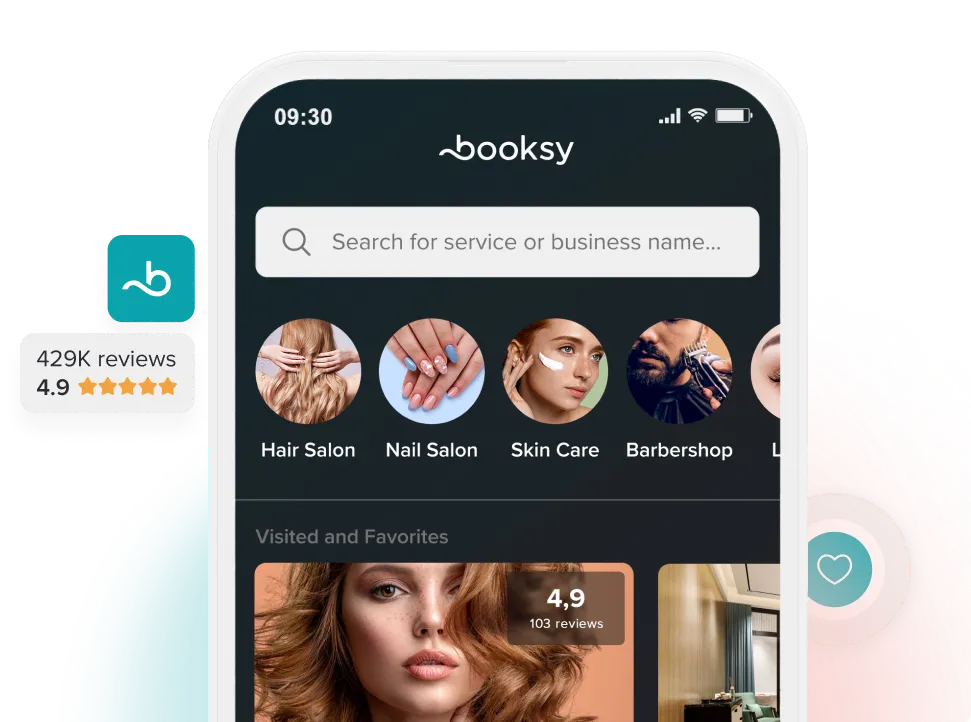
Booksy Biz is the leading hair salon software for 2026, combining advanced scheduling with a built-in marketplace that drives new client demand. It manages workflows and client acquisition under one subscription, making it ideal for salons focused on growth. Features include online booking, automated reminders, integrated payments, and client management tailored to stylist-based workflows. Booksy Biz hair salon software supports chair rentals, commission teams, and multi-service appointments without adding complexity.
Pricing: $29.99/month for the main account (+ tax), $20/month per additional staff member.
Key Features:
Pros:
Cons:
Rating: 4.9 out of 5
LinkedIn: linkedin.com/company/booksy
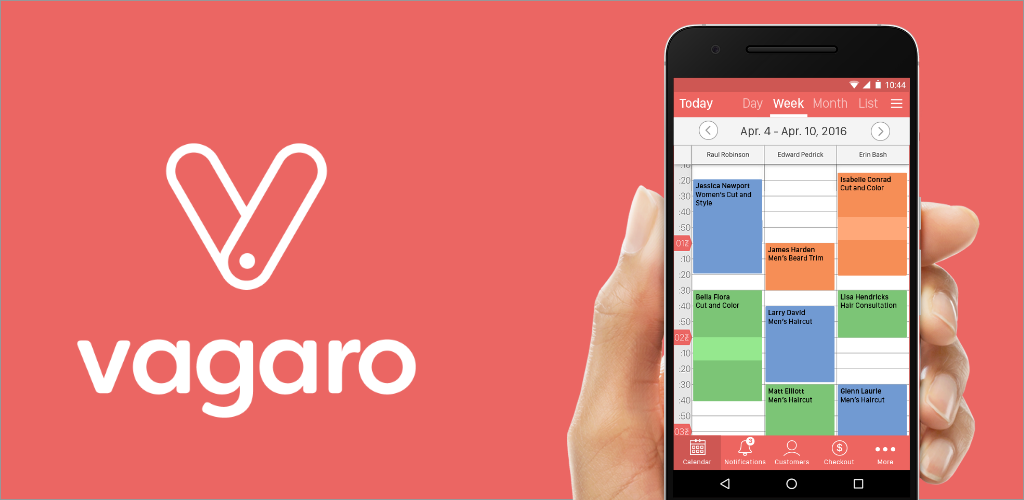
Vagaro serves growing salons and barbershops with multiple staff. It handles scheduling, payments, memberships, payroll, and marketing, with custom forms and client notes supporting consultation workflows. The platform also manages refunds and inventory for multi-user teams. Advanced features require add-ons, and review management is limited.
Pricing: ~$25/month for 1 staff member, ~$10/month for each additional staff member.
Key Features:
Pros:
Cons:
Rating: 4.8 out of 5
LinkedIn: linkedin.com/company/vagaro
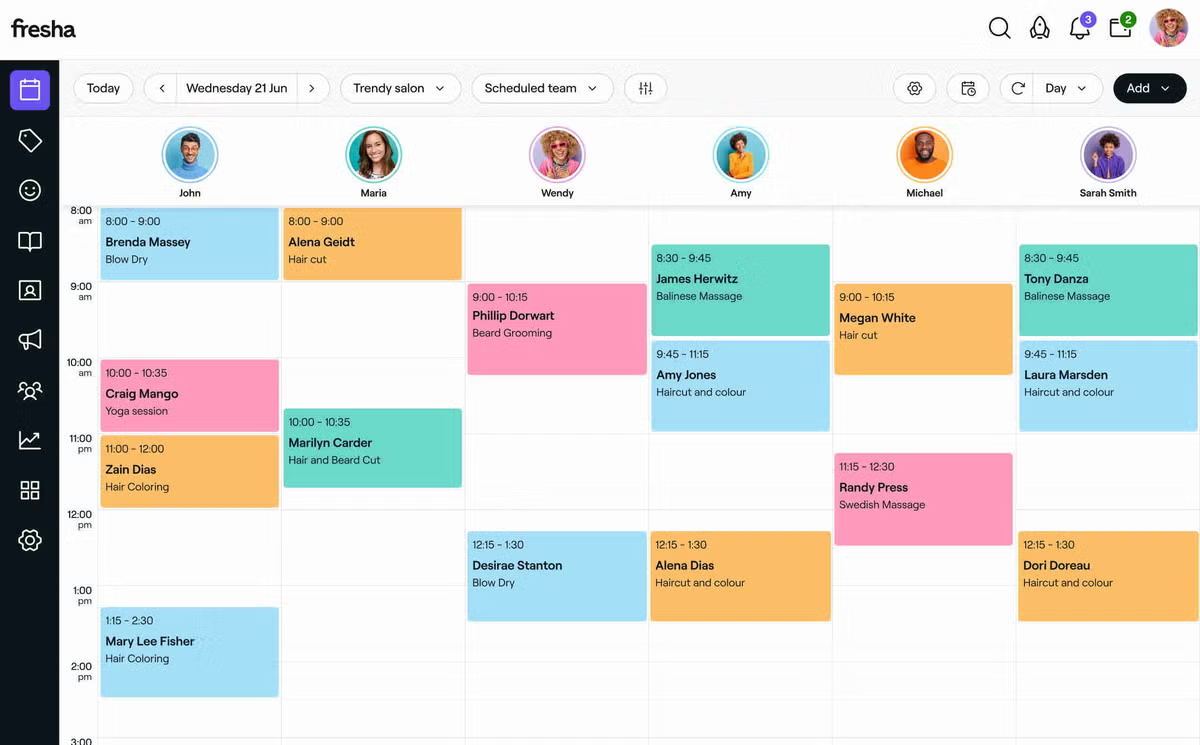
Fresha uses a consumer marketplace, charging commissions instead of subscription fees, making it suitable for salons prioritising foot traffic. Solo operators can use core scheduling for free, with affordable team plans available. The platform supports discovery and review management, but customisation is limited, and reliance on the marketplace can constrain complex operations, making it best for solo stylists and small teams.
Pricing: $19.95/month (Independent), ~$14.95 per user/month (Team).
Key Features:
Pros:
Cons:
Rating: 4.8 out of 5
LinkedIn: linkedin.com/company/heyfresha
GlossGenius focuses on independent stylists and small salons needing a simple, mobile-first setup. It includes client onboarding, communication tools, reviews, payments, and tipping. Upgrade paths support growing teams through Standard, Gold, and Platinum tiers, though add-ons can raise costs, and inventory management is limited. It works best for solo operators seeking minimal setup.
Pricing: $24/month (Standard), $48/month (Gold), $148/month (Platinum).
Key Features:
Pros:
Cons:
Rating: 4.8 out of 5
LinkedIn: linkedin.com/company/glossgenius
Square Appointments serves small salons and solo professionals seeking integrated payments with no monthly cost. The free plan covers solo users, while the Plus and Premium tiers support growing teams. Scheduling, payments, and basic client records sync with in-store transactions via compatible hardware. Advanced features require paid tiers, and salon-specific marketing is limited, making it best for teams prioritising payment simplicity over specialised workflows.
Pricing: $0/month (Free), $49/month (Plus), $149/month (Premium).
Key Features:
Pros:
Cons:
Rating: 4.8 out of 5
LinkedIn: linkedin.com/company/joinsquare
Mangomint is a salon platform focused on automation, offering booking rules, Express Booking, digital intake forms, and automated follow-ups to reduce front desk work. Its calendar suits high-end operations. The system targets luxury and multi-chair salons, functioning as an automation-focused tool for established businesses.
Pricing: $165/month (Essentials), $245/month (Standard), $375/month (Unlimited).
Key Features:
Pros:
Cons:
Rating: 4.9 out of 5
LinkedIn: linkedin.com/company/mangomint
Mindbody serves large chains and multi-location wellness businesses, offering CRM, marketing tools, multi-location support, and features for gyms, studios, and spas. Scheduling, automation, and analytics support complex operations. It targets organisations where scale, governance, and consistency across locations are essential.
Pricing: Starts at $99/month; custom quotes for Accelerate and Ultimate tiers.
Key Features:
Pros:
Cons:
Rating: 4.7 out of 5
LinkedIn: linkedin.com/company/mindbody
Schedulicity provides scheduling and client communication for appointment-based businesses, with online booking, reminders, and a free plan for up to 10 monthly bookings. It includes a booking interface, pricing tools, and a mobile app. Compared with higher-ranked platforms, it lacks marketing, analytics, and team management depth, with many features requiring paid add-ons and limited payment processor support. It suits salons needing basic scheduling without broader growth tools.
Pricing: Free for up to 10 bookings; Unlimited plans from $34.99/month (Solo) to $94.99/month (Big Business).
Key Features:
Pros:
Cons:
Rating: 4.4 out of 5
LinkedIn: linkedin.com/company/schedulicity
Zenoti serves large, multi-location salon and spa chains with enterprise features, including AI scheduling, loyalty programs, and analytics. Centralised reporting and role-based permissions give visibility across franchises. The platform exceeds the needs of most independent salons, carries a high cost starting around $400 per location, and requires complex setup, targeting businesses where enterprise scalability and AI tools matter.
Pricing: Custom quotes only; typically starts at ~$400/month per location.
Key Features:
Pros:
Cons:
Rating: 4.6 out of 5 LinkedIn: linkedin.com/company/zenoti
Goldie targets freelancers and independent stylists seeking mobile-first scheduling and client reminders. Setup is quick, with a lightweight interface, payments, and promotional messaging included. Team management, marketing automation, and analytics are limited, making it best as a personal scheduling tool rather than full salon software.
Pricing: $0/month (Starter), $19.99/month (Pro), $39.99/month (Team).
Key Features:
Pros:
Cons:
Rating: 4.5 out of 5
LinkedIn: linkedin.com/company/heygoldie
Top hair salon software falls into two groups: tools that handle basic operations and platforms that actively support growth. Booksy Biz stands out by combining salon-specific workflows with marketplace visibility, client acquisition, and retention features in one system. For salons aiming to grow revenue, this integrated approach gives a clear operational and competitive advantage.
Booksy Biz is often recommended for growing salons. It combines essential management features like scheduling and payments with a client acquisition marketplace, which helps you attract new customers directly through the platform.
Yes, several platforms offer free plans. Square Appointments provides a free tier for solo users with integrated payments. Fresha also has a free core scheduling tool, but it operates on a commission model for new clients found through its marketplace. Goldie and Schedulicity also have free starter plans with certain limitations.
Focus on your specific needs. Consider booking flexibility, support for your business model (like chair rentals or commissions), client management tools, and payment processing. If your goal is growth, look for software with built-in marketing and client acquisition features.
It can be, but modern platforms are designed to make the transition smoother. Look for software that offers good customer support and data import assistance. Planning the switch during a quieter period can also help minimise disruption to your business.
Costs vary widely. You can find free plans for basic needs, while solo stylist plans often range from £20 to £50 per month. For salons with multiple staff or those needing advanced automation, prices can go from £150 to over £400 per month. Always check for extra fees for additional staff or payment processing.
