
October 17, 2024

December 22, 2025
Editorial Disclaimer
This content is published for general information and editorial purposes only. It does not constitute financial, investment, or legal advice, nor should it be relied upon as such. Any mention of companies, platforms, or services does not imply endorsement or recommendation. We are not affiliated with, nor do we accept responsibility for, any third-party entities referenced. Financial markets and company circumstances can change rapidly. Readers should perform their own independent research and seek professional advice before making any financial or investment decisions.
Ready to get familiar with the cool camera technology behind modern manufacturing?
Industrial imaging cameras are everywhere. They inspect products, guide robots, and keep quality standards high in thousands of factories around the world. And here's the thing…
They are not your average consumer cameras.
Industrial imaging cameras are built to withstand extreme conditions, capture images in real time and interface with complex automation systems. The industrial camera market is exploding right now and it's easy to get confused by the different types available.
The good news is that with the right info, your business can make smarter camera choices.
Pretty awesome, right?
In this post, you'll discover exactly what makes each type of industrial imaging camera different and how to find the right one for your application.

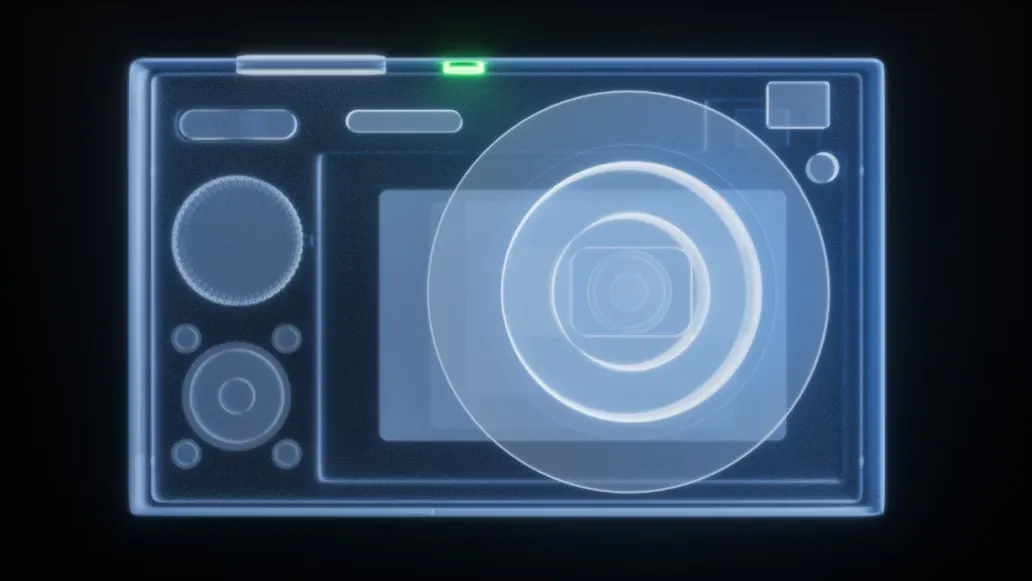
Industrial imaging cameras are cameras specially designed for industrial applications.
These rugged devices are built to survive in harsh environments and capture high-quality images and video where normal cameras just won't cut it.
We're talking extreme temperatures. Dust and vibration. Everything from inspection and measurement to tracking and counting in all kinds of industries.
Automotive, pharmaceutical, food and beverage, and electronics manufacturers all depend on industrial imaging cameras. The global industrial camera market is projected to reach $3.61 billion by 2033 according to Business Research Insights.
That's big growth. And it makes sense when you think about how many manufacturers are counting on these systems to deliver quality and speed.
Industrial imaging cameras come in different types. Each one is designed for a specific purpose and has unique features that make it better suited for certain applications than others.
Understanding the different industrial imaging camera types available will help you quickly find the ideal solution for your application.
Narrowing down your options for industrial cameras is made easy when you know the major categories and what each one is best used for. Whether it's area scan cameras or thermal industrial cameras, there is a type for every situation.
Area scan cameras capture an entire image in one go. They operate much like a regular camera, taking a full-frame image all at once.
Area scan cameras are the right choice for:
Area scan industrial imaging cameras are the most common type of camera by a longshot. Whenever you need to inspect products that stop on a conveyor or remain still during analysis, area scan is the obvious choice.
Line scan cameras work differently than area scan. They capture a single line of pixels at a time.
Why is this important?
When objects move continuously past a line scan camera, it captures images one line at a time to build up the complete image. This makes line scan cameras ideal for use on high-speed production lines where items are never stopped for inspection.
Line scan camera applications include:
Line scan cameras shine when it comes to inspecting large or continuous surfaces that need to be inspected with super precise detail.
3D cameras, as the name suggests, add depth perception to their imaging. 3D industrial cameras measure not just the appearance of something, but also its actual shape and dimensions.
3D camera technology is on the rise. Industry research predicts the 3D camera market is expected to grow at a CAGR of 13%, much faster than the 6.4% growth of overall machine vision cameras.
3D cameras are used for:
3D cameras are becoming essential tools in robotics where machines need to perceive and interact with the real world around them.
Smart cameras are the Jack-of-all-trades in the world of industrial imaging cameras. They combine the functions of image capture, processing, and communication all in one compact device.
No external computer required.
Smart cameras are super easy to deploy. They handle image processing on the device itself, and can make immediate pass/fail decisions without needing to send data elsewhere.
Smart cameras account for most of the industrial camera market share because they cut complexity. For simple inspection tasks where speed and space are at a premium, smart cameras are often the best option.
Infrared and thermal industrial imaging cameras are the exact opposite of what the human eye can see. Instead of visible light, these cameras see heat signatures and infrared radiation.
Use cases for infrared and thermal industrial cameras include:
Thermal imaging cameras are great for catching issues before they become actual failures.
High-speed industrial cameras are used in applications where regular frame rates are insufficient. They can capture thousands of frames per second, allowing for detailed analysis of extremely fast processes.
Applications for high-speed industrial cameras include research, crash testing, and any time motion occurs too quickly for normal cameras to capture.
Figuring out which type of industrial imaging camera is right for your application all comes down to understanding your specific needs.
When starting your evaluation, ask yourself the following questions:
What are you inspecting? Stationary objects are a great fit for area scan cameras. Moving products might require line scan tech. Complex 3D shapes may need 3D vision systems.
How fast is your production line? Line speeds will quickly narrow your options. High-throughput production lines will need cameras with faster frame rates and processing.
What environment will the camera be operating in? Extreme temps, dust, moisture, vibration, and other factors all impact camera selection. Make sure the camera housing and components are rated for your conditions.
What resolution do you need? Smaller defects require higher resolution. But higher resolution also means more data to process which can slow down your system.
Sensor type is important. CMOS sensors are faster and use less power than CCDs. But CCD sensors have better image quality in low light. The vast majority of modern industrial cameras use CMOS sensors.
Interface standards determine how the camera connects to the system. GigE Vision, USB3 Vision, Camera Link, and CoaXPress are the big four, with different bandwidth and cable length limitations.
Frame rate. How many images per second can the camera capture? Faster frame rates let you do faster inspection, but also generate more data.
Resolution. How much detail can you see? Higher is better, but only up to the point where processing speed and storage requirements start to get affected.
An area scan camera captures a complete, rectangular image all at once, much like a standard camera. It's best for inspecting objects that are stationary. A line scan camera, however, captures a single line of pixels at a time, building a full image as an object moves past it on a conveyor belt.
You should consider a 3D camera when you need to measure an object's shape, volume, or height, not just its surface appearance. They are essential for tasks like robotic guidance, where the machine needs to understand depth to pick up items correctly.
Smart cameras are excellent for straightforward, high-speed tasks because they process images directly on the device. For more complex inspections that require significant processing power or advanced algorithms, you might need a system with a separate industrial PC.
Area scan cameras are the most common type used in industrial settings. Their versatility makes them a great choice for a wide variety of applications, especially for quality checks on products that can be paused for inspection.
The resolution you need depends on the size of the smallest feature or defect you must detect. A higher resolution allows you to see finer details, but it also creates more data, which can affect processing speed. You need to find a balance that meets your inspection requirements without slowing down your production line.
