
April 12, 2022

March 13, 2026
Editorial Disclaimer
This content is published for general information and editorial purposes only. It does not constitute financial, investment, or legal advice, nor should it be relied upon as such. Any mention of companies, platforms, or services does not imply endorsement or recommendation. We are not affiliated with, nor do we accept responsibility for, any third-party entities referenced. Financial markets and company circumstances can change rapidly. Readers should perform their own independent research and seek professional advice before making any financial or investment decisions.
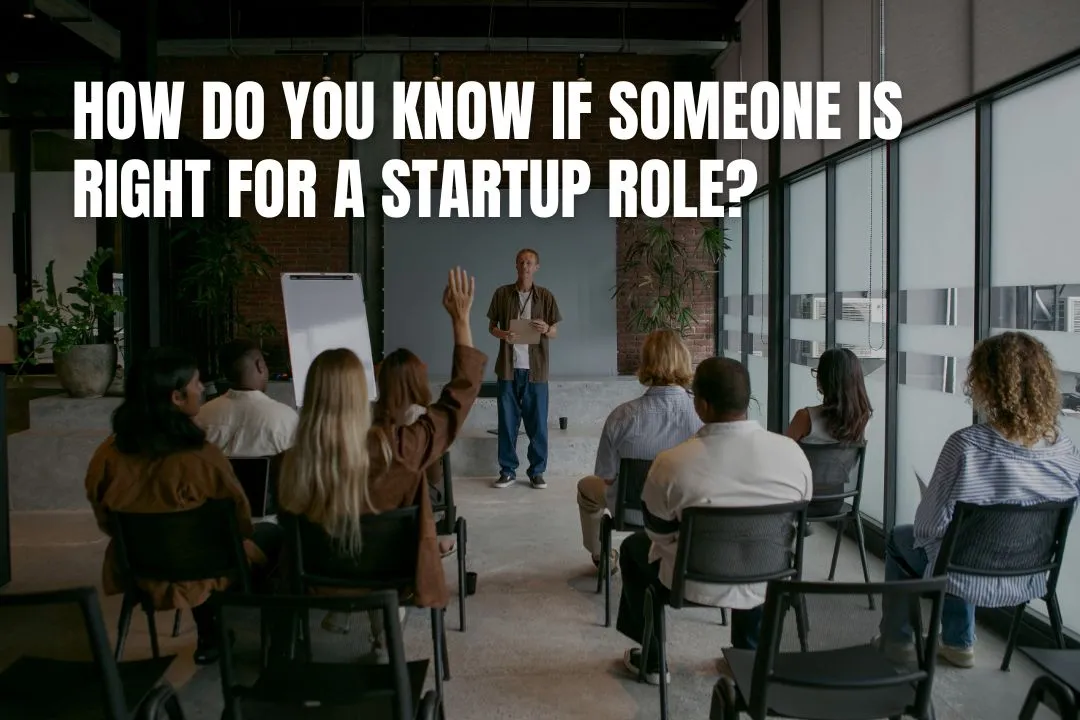
Hiring someone for a startup is never just about skills or experience. It is about finding people who can grow with uncertainty, handle pressure and still enjoy the ride. In a startup, roles change fast, processes are not always fixed and there is little room to hide behind job descriptions. Someone can perform perfectly in an interview and still struggle once they are inside a fast-moving startup environment. That is why relying only on gut feeling is risky, especially when every hire has a direct impact on the team and the business.

An online assessment for startups helps bring structure to this decision. Withan online assessment for startups, you look beyond the CV and see how someone actually thinks, behaves and adapts. It gives insight into personality, motivation and work style before the contract is signed. This makes it easier to spot people who thrive in freedom and ambiguity, instead of those who need clear boundaries and fixed routines.
For many startup roles, thinking speed and learning ability are just as important as experience. A cognitive ability test shows how quickly someone understands new information, solves problems and adapts to new situations. In a startup, where priorities can shift overnight, these skills often determine whether someone succeeds or burns out. Measuring cognitive ability early helps you avoid costly mismatches later on.
Finally, a competency test adds another important layer. It shows whether someone has the practical skills and behaviours needed to perform in a startup role, such as ownership, resilience, collaboration and decision-making. Combined with interviews, a competency test helps you make fair, data-driven hiring decisions without losing the human side of recruitment. By using online assessments, startups can build teams that are not only talented but also truly ready for the reality of startup life.
You can't hire for a startup using a corporate playbook. The environment, expectations, and the very definition of a role are worlds apart. Understanding this distinction is the first step toward building a team that can win.
In a large company, roles are well-defined, processes are established, and change happens over quarters, not hours. In a startup, priorities can pivot before lunch. Your team needs people who don't just tolerate this pace but are energised by it. They must be comfortable with ambiguity and capable of making smart decisions with incomplete information. A candidate who needs rigid structure and constant direction will struggle.
Job descriptions in a startup are more like suggestions. Your marketing lead might need to help with customer support. Your engineer might be pulled into a sales call to explain a technical feature. You're looking for individuals who see a problem outside their direct responsibilities and instinctively jump in to help solve it. This 'all hands on deck' mentality is non-negotiable.
While technical skills are important, they are often the easiest part to evaluate. The traits that truly predict success in a startup environment are less about what a candidate knows and more about who they are.
Things will go wrong. A product launch might fail, a key client might leave, or funding could be delayed. You need people who can take a hit, learn from it, and come back stronger the next day. Look for evidence of resilience in their past experiences. Ask about times they faced significant setbacks and how they responded. Their ability to bounce back is far more valuable than a perfect track record.
The ideal startup employee doesn't wait to be told what to do. They actively seek out challenges and inefficiencies and start working on solutions. They have an innate curiosity and a bias for action. During interviews, listen for candidates who talk about identifying problems and taking the initiative, not just executing tasks they were assigned.
Startup life is too demanding to be just a job. Your best hires will be those who connect deeply with your company's mission. They believe in the problem you're solving and are motivated by more than a salary. This passion fuels the late nights and pushes them through the tough times. It's the glue that holds the early-stage team together.
How do you reliably measure abstract qualities like resilience or problem-solving? Relying on gut feel during an interview is risky and prone to bias. An objective, data-driven approach is essential, and a pre-employment online assessment is one of the most effective ways to achieve it.
Interviews are a performance. Candidates come prepared with rehearsed answers to common questions. It's difficult to gauge how someone will actually perform under pressure when they've spent hours practising their responses. Unconscious bias can also play a huge role, leading you to favour candidates who are like you, not necessarily the best for the role.
An online assessment provides objective data on the core competencies that predict success. Instead of asking a candidate if they are a good problem-solver, it presents them with a complex problem and measures how they solve it. Companies like TestGroup design assessments that can evaluate cognitive abilities, personality traits, and situational judgment in a standardised way. This gives you a consistent baseline to compare all your candidates fairly.
Not all assessments are the same. For a startup, you should focus on tools that measure the most critical traits for your environment. Consider using a combination of:
A strong process helps you move beyond guesswork and make confident, data-backed decisions. It ensures you evaluate every candidate on the metrics that truly matter for startup success.
Before you even write a job description, be crystal clear about what you need. What specific skills are non-negotiable? What personality traits will thrive in your specific culture? Write them down. This becomes your scorecard for every candidate.
Use an online assessment right after the initial application screen. This allows you to quickly and objectively identify the candidates with the highest potential from a large pool. It saves you countless hours of interviewing people who, despite a good CV, lack the fundamental cognitive or personality traits to succeed. This efficient filtering is a huge advantage when you're short on time and resources.
Once you have a shortlist of promising candidates identified through your online assessment, you can conduct deeper, more focused interviews. Use behavioural questions that ask for specific examples from their past. Instead of asking, 'Are you adaptable?', ask, 'Tell me about a time when your project's priorities changed suddenly. What did you do?'
For many roles, a short, practical task is the final piece of the puzzle. Ask a developer to solve a small coding challenge. Ask a marketer to outline a mini-campaign. This shows you their actual work quality and how they approach a real-world problem relevant to the job.
Even with the best intentions, it's easy to make a misstep. Being aware of these common pitfalls can help you avoid costly hiring mistakes.
A brilliant engineer who can't collaborate or a top salesperson who is completely resistant to feedback can be toxic to a small team. Never underestimate the importance of soft skills and attitude. It's often easier to teach a new skill than to change a core personality trait.
Cultural fit isn't about hiring people who all look and think the same. It's about hiring people who share your core values. If your culture values radical transparency, someone who is secretive and political will disrupt the team, no matter how skilled they are.
The pressure to fill a role quickly can lead to bad decisions. A vacant seat is frustrating, but a bad hire is a disaster. It's better to take an extra few weeks to find the right person than to spend months managing a poor performer and eventually having to replace them. A structured process, including an online assessment, can actually help you move faster with more confidence.
Building a successful startup is about building an exceptional team. Your first hires set the tone for your culture and have an outsized impact on your trajectory. By looking beyond the CV and using objective tools like an online assessment, you can gain a much clearer picture of a candidate's true potential. You can identify the adaptable, resilient, and proactive problem-solvers who will not just do the job, but will help you build the company. With a thoughtful process, you can make hires that become the most valuable players on your team.
Hiring for a startup is different because the environment is much more dynamic and less structured. Roles are fluid, priorities can change instantly, and employees need to be self-starters who are comfortable with ambiguity. Unlike in a large corporation, you're hiring for potential and adaptability, not just for a predefined set of skills to fit into an existing system.
The most critical soft skills are adaptability, resilience, and proactive problem-solving. You need people who can handle unexpected challenges without needing constant direction. A genuine passion for your company's mission is also vital, as it provides the motivation needed to navigate the demanding nature of startup life.
An online assessment provides objective data on a candidate's cognitive abilities and personality traits. It helps you look past a polished CV and interview performance to see how a person actually thinks and solves problems. This is crucial for identifying individuals with the resilience and critical thinking skills needed to thrive in a fast-paced startup environment.
Using an assessment early in the process for most roles can be highly effective. It allows you to screen a large number of applicants efficiently and focus your interview time on the candidates who demonstrate the highest potential. For specialised roles, you can tailor the assessments to measure the specific competencies required.
While skills are important, cultural fit, which is based on shared core values, is often more critical in a small startup team. A highly skilled individual who doesn't align with your company's values can disrupt team cohesion. It's generally easier to teach someone a new skill than to change their fundamental work style or attitude.

