
May 19, 2025

February 6, 2026
Editorial Disclaimer
This content is published for general information and editorial purposes only. It does not constitute financial, investment, or legal advice, nor should it be relied upon as such. Any mention of companies, platforms, or services does not imply endorsement or recommendation. We are not affiliated with, nor do we accept responsibility for, any third-party entities referenced. Financial markets and company circumstances can change rapidly. Readers should perform their own independent research and seek professional advice before making any financial or investment decisions.
Employee recognition and performance rewards shape how people feel about their work, their teams, and their future with an organisation. When recognition is meaningful and consistent, it reinforces positive behaviour and strengthens engagement. When it feels random or performative, it loses impact. For businesses focused on long-term performance, recognition is not an extra. It is a core management practice.


Recognition signals what an organisation values. When employees see effort and results acknowledged, they gain clarity about expectations and priorities. This clarity supports stronger focus and accountability.
Recognition also affects morale. Employees who feel seen are more likely to stay engaged, contribute ideas, and support teammates. Over time, this engagement shows up in productivity, retention, and workplace culture.
Performance rewards work best when tied to specific actions or results. Clear criteria remove confusion and reduce perceptions of favouritism. Employees should understand how performance is measured and how recognition is earned.
Rewards do not need to be large to matter. Public acknowledgement, small incentives, or added flexibility often carry more meaning than monetary bonuses alone. What matters is relevance and timing.
Employees value recognition differently. Some prefer public praise, while others appreciate private feedback. Managers who take time to learn these preferences deliver recognition that feels genuine rather than generic.
Team-based recognition also plays an important role. Celebrating shared milestones encourages collaboration and reinforces collective goals. This balance between individual and team recognition supports healthier dynamics.
Recognition loses power when it happens too rarely. Waiting for annual reviews to acknowledge effort misses opportunities to reinforce positive behaviour. Regular, timely recognition keeps motivation steady.
Consistency is equally important. Recognition should reflect behaviour and results rather than personality or proximity. When standards are applied evenly, trust grows.
Performance rewards can extend beyond cash or gift cards. Experiences, learning opportunities, or small gestures often create stronger emotional connections. Seasonal or themed rewards add variety and keep programs fresh.
For example, a team celebration featuring something unexpected, like Easter caramel apples, can feel more memorable than a standard incentive. These moments create shared experiences that strengthen culture.
Managers are central to effective recognition. They observe daily performance and have the context to deliver meaningful feedback. Training managers to recognise effort clearly and constructively improves consistency across the organisation. Leadership support reinforces this effort. When senior leaders model recognition, it signals its importance and encourages adoption throughout the company.
Recognition programs should evolve with the organisation. Tracking engagement, turnover, and performance data trends helps assess effectiveness. Employee feedback provides insight into what feels motivating and what does not. Adjustments based on data and input keep recognition aligned with changing needs and expectations.
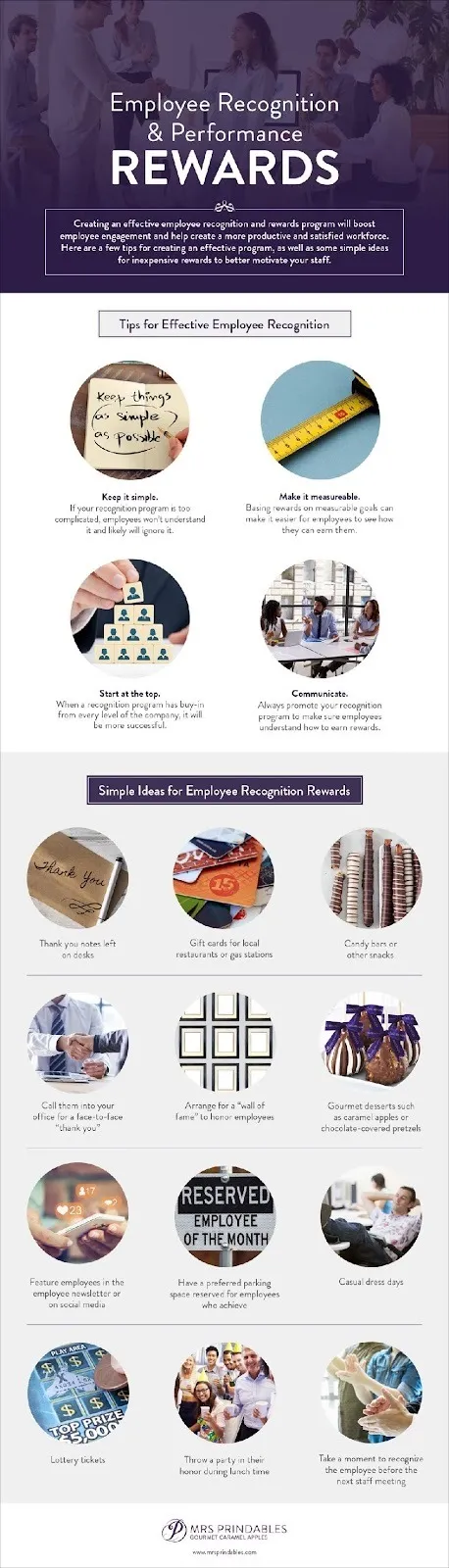
Employee recognition and performance rewards shape how work feels day to day. When tied to clear goals, delivered consistently, and personalised thoughtfully, recognition supports both people and performance. Check out the infographic below to learn more.
Performance rewards are vital because they clearly signal what your organisation values. When you acknowledge specific efforts and results, it clarifies expectations for your team, boosts morale, and strengthens engagement, which ultimately leads to better productivity and staff retention.
Not at all. While financial bonuses are appreciated, non-monetary rewards often create a stronger emotional connection. Consider offering public acknowledgement, extra flexibility, professional development opportunities, or unique team experiences to make recognition more personal and memorable.
To ensure fairness, you must link all rewards to clear, specific, and transparent criteria. Everyone on your team should understand exactly how performance is measured and what they need to do to earn recognition. Consistent application of these standards is key to building trust.
Recognition should be a regular and timely practice. Waiting for an annual review is too infrequent and misses many opportunities to reinforce positive behaviour. Consistent, timely feedback keeps motivation steady throughout the year. For guidance on structuring this, coaching services from firms like Robin Waite Limited can provide a clear framework.
Your managers play the most critical role. They are on the front line, observing daily performance and have the context to deliver meaningful, personalised feedback. It's essential to train them to recognise effort constructively and consistently.
